
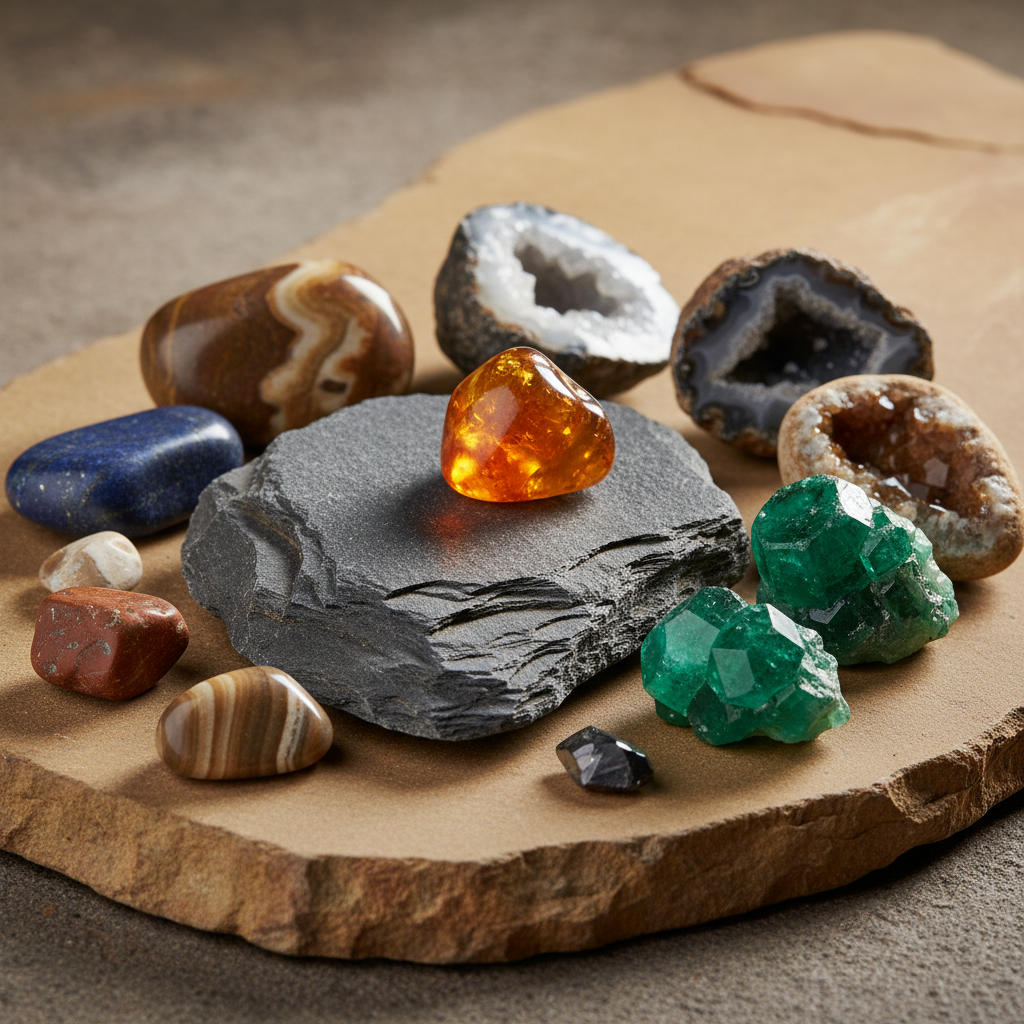
The Science Behind Photo Identification
Understanding computer vision in geology requires attention to multiple physical and optical properties that experienced collectors evaluate systematically. Observation number 1 in your identification journey builds pattern recognition that apps and field guides reinforce. Color, hardness, luster, cleavage, fracture, crystal habit, and specific gravity each eliminate possibilities and narrow your search. When combined with modern AI tools like Rock Identifier, these traditional skills create a comprehensive identification workflow that serves you in the field, at gem shows, and at home with inherited collections.
Understanding computer vision in geology requires attention to multiple physical and optical properties that experienced collectors evaluate systematically. Observation number 2 in your identification journey builds pattern recognition that apps and field guides reinforce. Color, hardness, luster, cleavage, fracture, crystal habit, and specific gravity each eliminate possibilities and narrow your search. When combined with modern AI tools like Rock Identifier, these traditional skills create a comprehensive identification workflow that serves you in the field, at gem shows, and at home with inherited collections.
Understanding computer vision in geology requires attention to multiple physical and optical properties that experienced collectors evaluate systematically. Observation number 3 in your identification journey builds pattern recognition that apps and field guides reinforce. Color, hardness, luster, cleavage, fracture, crystal habit, and specific gravity each eliminate possibilities and narrow your search. When combined with modern AI tools like Rock Identifier, these traditional skills create a comprehensive identification workflow that serves you in the field, at gem shows, and at home with inherited collections.
How AI Analyzes Stone Photos
Modern stone identification by photo relies on convolutional neural networks trained on millions of labeled mineral and rock images. These networks learn hierarchical features — edges and textures at shallow layers, complex patterns like crystal habits and color zoning at deeper layers — that distinguish one mineral from another.
The training process exposes algorithms to enormous diversity within each species. Amethyst ranges from pale lavender to deep purple. Quartz crystals vary from microscopic druzy coatings to meter-long specimens. Robust training data captures this natural variation, enabling accurate identification of real-world specimens rather than only textbook-perfect samples.
When you photograph a stone, the app preprocesses the image — adjusting for lighting, cropping to the specimen, and normalizing color — before feeding it to the neural network. The network outputs probability scores across its mineral database, and the highest-scoring matches become your identification results.
Rock Identifier's models are specifically tuned for geological specimens, not general object recognition. This specialization means the app distinguishes between visually similar minerals that generic image recognition would conflate. Feldspar and quartz, jasper and agate, calcite and quartz — pairs that challenge beginners are precisely where specialized training pays off.
Photography Tips for Accurate Results
Understanding specimen photography techniques requires attention to multiple physical and optical properties that experienced collectors evaluate systematically. Observation number 1 in your identification journey builds pattern recognition that apps and field guides reinforce. Color, hardness, luster, cleavage, fracture, crystal habit, and specific gravity each eliminate possibilities and narrow your search. When combined with modern AI tools like Rock Identifier, these traditional skills create a comprehensive identification workflow that serves you in the field, at gem shows, and at home with inherited collections.
Understanding specimen photography techniques requires attention to multiple physical and optical properties that experienced collectors evaluate systematically. Observation number 2 in your identification journey builds pattern recognition that apps and field guides reinforce. Color, hardness, luster, cleavage, fracture, crystal habit, and specific gravity each eliminate possibilities and narrow your search. When combined with modern AI tools like Rock Identifier, these traditional skills create a comprehensive identification workflow that serves you in the field, at gem shows, and at home with inherited collections.
Understanding specimen photography techniques requires attention to multiple physical and optical properties that experienced collectors evaluate systematically. Observation number 3 in your identification journey builds pattern recognition that apps and field guides reinforce. Color, hardness, luster, cleavage, fracture, crystal habit, and specific gravity each eliminate possibilities and narrow your search. When combined with modern AI tools like Rock Identifier, these traditional skills create a comprehensive identification workflow that serves you in the field, at gem shows, and at home with inherited collections.
Understanding specimen photography techniques requires attention to multiple physical and optical properties that experienced collectors evaluate systematically. Observation number 4 in your identification journey builds pattern recognition that apps and field guides reinforce. Color, hardness, luster, cleavage, fracture, crystal habit, and specific gravity each eliminate possibilities and narrow your search. When combined with modern AI tools like Rock Identifier, these traditional skills create a comprehensive identification workflow that serves you in the field, at gem shows, and at home with inherited collections.
What Photo ID Can and Cannot Do
Understanding photo identification limitations requires attention to multiple physical and optical properties that experienced collectors evaluate systematically. Observation number 1 in your identification journey builds pattern recognition that apps and field guides reinforce. Color, hardness, luster, cleavage, fracture, crystal habit, and specific gravity each eliminate possibilities and narrow your search. When combined with modern AI tools like Rock Identifier, these traditional skills create a comprehensive identification workflow that serves you in the field, at gem shows, and at home with inherited collections.
Understanding photo identification limitations requires attention to multiple physical and optical properties that experienced collectors evaluate systematically. Observation number 2 in your identification journey builds pattern recognition that apps and field guides reinforce. Color, hardness, luster, cleavage, fracture, crystal habit, and specific gravity each eliminate possibilities and narrow your search. When combined with modern AI tools like Rock Identifier, these traditional skills create a comprehensive identification workflow that serves you in the field, at gem shows, and at home with inherited collections.
Understanding photo identification limitations requires attention to multiple physical and optical properties that experienced collectors evaluate systematically. Observation number 3 in your identification journey builds pattern recognition that apps and field guides reinforce. Color, hardness, luster, cleavage, fracture, crystal habit, and specific gravity each eliminate possibilities and narrow your search. When combined with modern AI tools like Rock Identifier, these traditional skills create a comprehensive identification workflow that serves you in the field, at gem shows, and at home with inherited collections.
Step-by-Step Photo Identification Workflow
Understanding identification workflow requires attention to multiple physical and optical properties that experienced collectors evaluate systematically. Observation number 1 in your identification journey builds pattern recognition that apps and field guides reinforce. Color, hardness, luster, cleavage, fracture, crystal habit, and specific gravity each eliminate possibilities and narrow your search. When combined with modern AI tools like Rock Identifier, these traditional skills create a comprehensive identification workflow that serves you in the field, at gem shows, and at home with inherited collections.
Understanding identification workflow requires attention to multiple physical and optical properties that experienced collectors evaluate systematically. Observation number 2 in your identification journey builds pattern recognition that apps and field guides reinforce. Color, hardness, luster, cleavage, fracture, crystal habit, and specific gravity each eliminate possibilities and narrow your search. When combined with modern AI tools like Rock Identifier, these traditional skills create a comprehensive identification workflow that serves you in the field, at gem shows, and at home with inherited collections.
Understanding identification workflow requires attention to multiple physical and optical properties that experienced collectors evaluate systematically. Observation number 3 in your identification journey builds pattern recognition that apps and field guides reinforce. Color, hardness, luster, cleavage, fracture, crystal habit, and specific gravity each eliminate possibilities and narrow your search. When combined with modern AI tools like Rock Identifier, these traditional skills create a comprehensive identification workflow that serves you in the field, at gem shows, and at home with inherited collections.
Improving Results Over Time
Understanding iterative identification improvement requires attention to multiple physical and optical properties that experienced collectors evaluate systematically. Observation number 1 in your identification journey builds pattern recognition that apps and field guides reinforce. Color, hardness, luster, cleavage, fracture, crystal habit, and specific gravity each eliminate possibilities and narrow your search. When combined with modern AI tools like Rock Identifier, these traditional skills create a comprehensive identification workflow that serves you in the field, at gem shows, and at home with inherited collections.
Understanding iterative identification improvement requires attention to multiple physical and optical properties that experienced collectors evaluate systematically. Observation number 2 in your identification journey builds pattern recognition that apps and field guides reinforce. Color, hardness, luster, cleavage, fracture, crystal habit, and specific gravity each eliminate possibilities and narrow your search. When combined with modern AI tools like Rock Identifier, these traditional skills create a comprehensive identification workflow that serves you in the field, at gem shows, and at home with inherited collections.
Understanding iterative identification improvement requires attention to multiple physical and optical properties that experienced collectors evaluate systematically. Observation number 3 in your identification journey builds pattern recognition that apps and field guides reinforce. Color, hardness, luster, cleavage, fracture, crystal habit, and specific gravity each eliminate possibilities and narrow your search. When combined with modern AI tools like Rock Identifier, these traditional skills create a comprehensive identification workflow that serves you in the field, at gem shows, and at home with inherited collections.
Photo ID vs. Physical Testing
Understanding complementary testing methods requires attention to multiple physical and optical properties that experienced collectors evaluate systematically. Observation number 1 in your identification journey builds pattern recognition that apps and field guides reinforce. Color, hardness, luster, cleavage, fracture, crystal habit, and specific gravity each eliminate possibilities and narrow your search. When combined with modern AI tools like Rock Identifier, these traditional skills create a comprehensive identification workflow that serves you in the field, at gem shows, and at home with inherited collections.
Understanding complementary testing methods requires attention to multiple physical and optical properties that experienced collectors evaluate systematically. Observation number 2 in your identification journey builds pattern recognition that apps and field guides reinforce. Color, hardness, luster, cleavage, fracture, crystal habit, and specific gravity each eliminate possibilities and narrow your search. When combined with modern AI tools like Rock Identifier, these traditional skills create a comprehensive identification workflow that serves you in the field, at gem shows, and at home with inherited collections.
Understanding complementary testing methods requires attention to multiple physical and optical properties that experienced collectors evaluate systematically. Observation number 3 in your identification journey builds pattern recognition that apps and field guides reinforce. Color, hardness, luster, cleavage, fracture, crystal habit, and specific gravity each eliminate possibilities and narrow your search. When combined with modern AI tools like Rock Identifier, these traditional skills create a comprehensive identification workflow that serves you in the field, at gem shows, and at home with inherited collections.
The Future of Photo-Based Geology
Understanding emerging identification technology requires attention to multiple physical and optical properties that experienced collectors evaluate systematically. Observation number 1 in your identification journey builds pattern recognition that apps and field guides reinforce. Color, hardness, luster, cleavage, fracture, crystal habit, and specific gravity each eliminate possibilities and narrow your search. When combined with modern AI tools like Rock Identifier, these traditional skills create a comprehensive identification workflow that serves you in the field, at gem shows, and at home with inherited collections.
Understanding emerging identification technology requires attention to multiple physical and optical properties that experienced collectors evaluate systematically. Observation number 2 in your identification journey builds pattern recognition that apps and field guides reinforce. Color, hardness, luster, cleavage, fracture, crystal habit, and specific gravity each eliminate possibilities and narrow your search. When combined with modern AI tools like Rock Identifier, these traditional skills create a comprehensive identification workflow that serves you in the field, at gem shows, and at home with inherited collections.
Understanding emerging identification technology requires attention to multiple physical and optical properties that experienced collectors evaluate systematically. Observation number 3 in your identification journey builds pattern recognition that apps and field guides reinforce. Color, hardness, luster, cleavage, fracture, crystal habit, and specific gravity each eliminate possibilities and narrow your search. When combined with modern AI tools like Rock Identifier, these traditional skills create a comprehensive identification workflow that serves you in the field, at gem shows, and at home with inherited collections.
Frequently Asked Questions
Can you identify a stone from a photo?
Yes, modern AI apps like Rock Identifier analyze stone photos and provide accurate identifications for most common specimens.
How do I take a good photo for stone identification?
Use natural lighting, a neutral background, and fill the frame with the specimen. Include fracture surfaces and multiple angles for best results.
Is photo identification as accurate as lab testing?
Photo ID is excellent for common specimens but cannot replace laboratory instruments for definitive identification of valuable or ambiguous stones.
What app identifies rocks by photo?
Rock Identifier is a leading app that identifies rocks, gems, and minerals from photographs with detailed educational profiles.
Can I identify stones from old photos?
Yes, Rock Identifier can analyze existing photos, though higher resolution and good lighting improve accuracy.
Download Rock Identifier Today
Whether you are a seasoned collector or picking up your first interesting pebble, Rock Identifier: Find Stone puts expert-level identification in your pocket. Simply snap a photo of any rock, gem, crystal, or mineral and receive detailed results within seconds.
Download Rock Identifier on the App Store and start your geological journey today.