
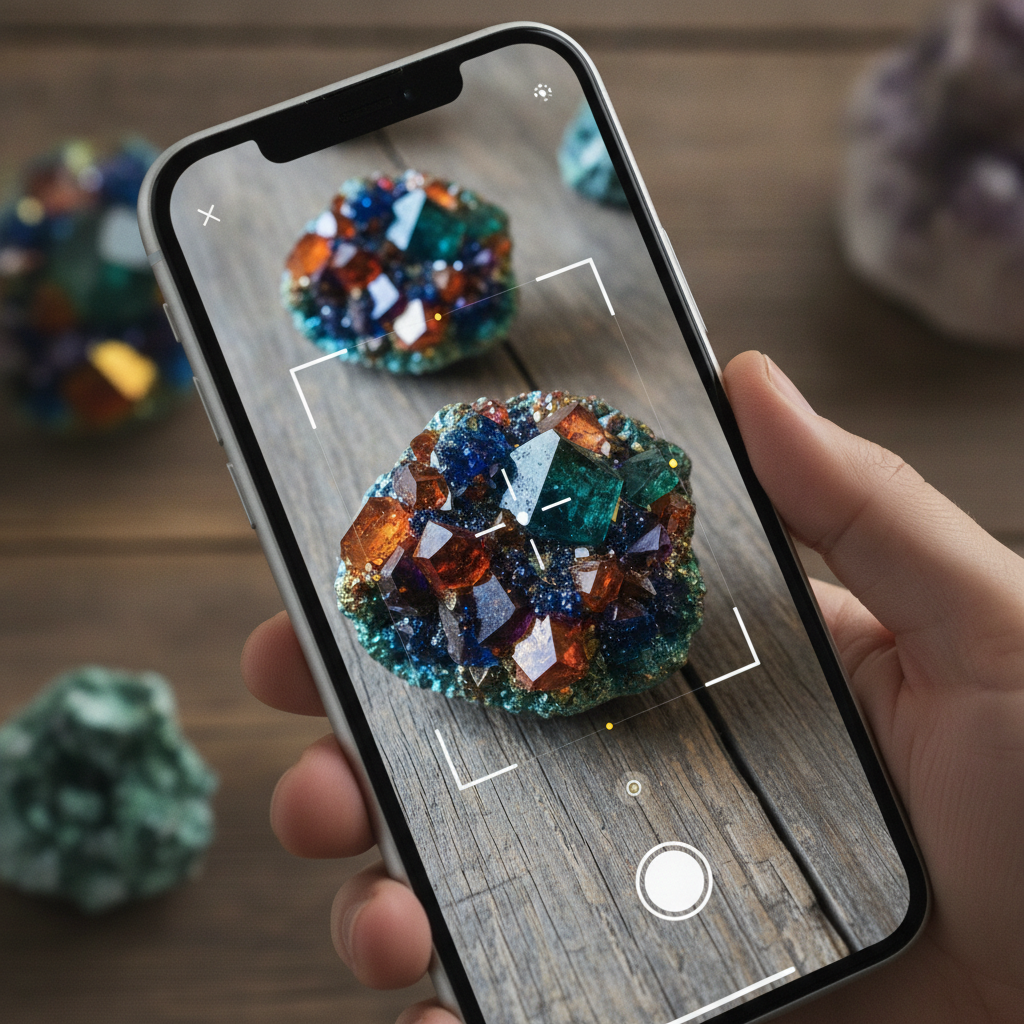
Why a Stone ID App Belongs in Every Field Kit
A strong rock identifier stone id app workflow starts with context, not guesswork. In mobile-first identification workflows, professionals begin by defining what can be observed with the naked eye and what requires closer inspection under magnification. This approach keeps identifications objective and repeatable, especially when two stones share similar color or sparkle. Collectors who document each observation build better pattern recognition over time, and that discipline turns an uncertain first impression into a defensible identification supported by multiple clues instead of a single visual trait.
Field technique matters just as much as theory. For using your phone as a rapid geology notebook, use stable lighting, a neutral background, and at least two viewing angles so you can compare surface texture with internal features. If the stone is rough, photograph both weathered and freshly exposed faces. If it is polished, include side profiles that show transparency and body tone. These small habits reduce false positives and help you separate lookalikes before you invest time in advanced tests like hardness checks, streak analysis, or refractive measurements.
Many beginners struggle with thinking apps are only for beginners, because stones can mimic each other after tumbling, heat treatment, or natural weathering. The practical fix is to evaluate a short stack of properties together: luster, hardness range, fracture pattern, and any visible zoning or inclusions. When one property conflicts with your first guess, treat that as useful evidence rather than an error. Expert identifiers constantly revise hypotheses as new data appears, and that mindset prevents costly mistakes when sorting rough lots or inherited jewelry pieces.
Rock Identifier fits naturally into getting instant value from first scan by giving you a fast first pass that is grounded in a large mineral and gem dataset. After you scan, compare the top matches against your own notes and run one confirmatory test that can clearly separate the candidates. This combination of app insight and hands-on validation is the safest way to use AI for gemstone and stone education. It also builds confidence quickly, because every identification becomes a short lesson you can apply to the next unknown specimen.
How to Capture Scan-Ready Stone Photos
A strong rock identifier stone id app workflow starts with context, not guesswork. In camera habits that improve confidence scores, professionals begin by defining what can be observed with the naked eye and what requires closer inspection under magnification. This approach keeps identifications objective and repeatable, especially when two stones share similar color or sparkle. Collectors who document each observation build better pattern recognition over time, and that discipline turns an uncertain first impression into a defensible identification supported by multiple clues instead of a single visual trait.
Field technique matters just as much as theory. For shooting multiple angles with stable focus, use stable lighting, a neutral background, and at least two viewing angles so you can compare surface texture with internal features. If the stone is rough, photograph both weathered and freshly exposed faces. If it is polished, include side profiles that show transparency and body tone. These small habits reduce false positives and help you separate lookalikes before you invest time in advanced tests like hardness checks, streak analysis, or refractive measurements.
Many beginners struggle with zooming digitally instead of moving closer, because stones can mimic each other after tumbling, heat treatment, or natural weathering. The practical fix is to evaluate a short stack of properties together: luster, hardness range, fracture pattern, and any visible zoning or inclusions. When one property conflicts with your first guess, treat that as useful evidence rather than an error. Expert identifiers constantly revise hypotheses as new data appears, and that mindset prevents costly mistakes when sorting rough lots or inherited jewelry pieces.
Rock Identifier fits naturally into feeding the model cleaner inputs by giving you a fast first pass that is grounded in a large mineral and gem dataset. After you scan, compare the top matches against your own notes and run one confirmatory test that can clearly separate the candidates. This combination of app insight and hands-on validation is the safest way to use AI for gemstone and stone education. It also builds confidence quickly, because every identification becomes a short lesson you can apply to the next unknown specimen.
Understanding Results and Confidence
A strong rock identifier stone id app workflow starts with context, not guesswork. In interpreting ranked matches correctly, professionals begin by defining what can be observed with the naked eye and what requires closer inspection under magnification. This approach keeps identifications objective and repeatable, especially when two stones share similar color or sparkle. Collectors who document each observation build better pattern recognition over time, and that discipline turns an uncertain first impression into a defensible identification supported by multiple clues instead of a single visual trait.
Field technique matters just as much as theory. For checking descriptions beyond the top line, use stable lighting, a neutral background, and at least two viewing angles so you can compare surface texture with internal features. If the stone is rough, photograph both weathered and freshly exposed faces. If it is polished, include side profiles that show transparency and body tone. These small habits reduce false positives and help you separate lookalikes before you invest time in advanced tests like hardness checks, streak analysis, or refractive measurements.
Many beginners struggle with treating close confidence scores as certainty, because stones can mimic each other after tumbling, heat treatment, or natural weathering. The practical fix is to evaluate a short stack of properties together: luster, hardness range, fracture pattern, and any visible zoning or inclusions. When one property conflicts with your first guess, treat that as useful evidence rather than an error. Expert identifiers constantly revise hypotheses as new data appears, and that mindset prevents costly mistakes when sorting rough lots or inherited jewelry pieces.
Rock Identifier fits naturally into using ranking data intelligently by giving you a fast first pass that is grounded in a large mineral and gem dataset. After you scan, compare the top matches against your own notes and run one confirmatory test that can clearly separate the candidates. This combination of app insight and hands-on validation is the safest way to use AI for gemstone and stone education. It also builds confidence quickly, because every identification becomes a short lesson you can apply to the next unknown specimen.
From Quick Scan to Confirmed Identification
A strong rock identifier stone id app workflow starts with context, not guesswork. In bridging AI output with manual checks, professionals begin by defining what can be observed with the naked eye and what requires closer inspection under magnification. This approach keeps identifications objective and repeatable, especially when two stones share similar color or sparkle. Collectors who document each observation build better pattern recognition over time, and that discipline turns an uncertain first impression into a defensible identification supported by multiple clues instead of a single visual trait.
Field technique matters just as much as theory. For adding one physical test after each scan, use stable lighting, a neutral background, and at least two viewing angles so you can compare surface texture with internal features. If the stone is rough, photograph both weathered and freshly exposed faces. If it is polished, include side profiles that show transparency and body tone. These small habits reduce false positives and help you separate lookalikes before you invest time in advanced tests like hardness checks, streak analysis, or refractive measurements.
Many beginners struggle with ignoring contradictions between tests, because stones can mimic each other after tumbling, heat treatment, or natural weathering. The practical fix is to evaluate a short stack of properties together: luster, hardness range, fracture pattern, and any visible zoning or inclusions. When one property conflicts with your first guess, treat that as useful evidence rather than an error. Expert identifiers constantly revise hypotheses as new data appears, and that mindset prevents costly mistakes when sorting rough lots or inherited jewelry pieces.
Rock Identifier fits naturally into creating a verification loop by giving you a fast first pass that is grounded in a large mineral and gem dataset. After you scan, compare the top matches against your own notes and run one confirmatory test that can clearly separate the candidates. This combination of app insight and hands-on validation is the safest way to use AI for gemstone and stone education. It also builds confidence quickly, because every identification becomes a short lesson you can apply to the next unknown specimen.
Organizing Finds with the Collection Feature
A strong rock identifier stone id app workflow starts with context, not guesswork. In building a searchable specimen library, professionals begin by defining what can be observed with the naked eye and what requires closer inspection under magnification. This approach keeps identifications objective and repeatable, especially when two stones share similar color or sparkle. Collectors who document each observation build better pattern recognition over time, and that discipline turns an uncertain first impression into a defensible identification supported by multiple clues instead of a single visual trait.
Field technique matters just as much as theory. For attaching location and context notes, use stable lighting, a neutral background, and at least two viewing angles so you can compare surface texture with internal features. If the stone is rough, photograph both weathered and freshly exposed faces. If it is polished, include side profiles that show transparency and body tone. These small habits reduce false positives and help you separate lookalikes before you invest time in advanced tests like hardness checks, streak analysis, or refractive measurements.
Many beginners struggle with saving photos without metadata, because stones can mimic each other after tumbling, heat treatment, or natural weathering. The practical fix is to evaluate a short stack of properties together: luster, hardness range, fracture pattern, and any visible zoning or inclusions. When one property conflicts with your first guess, treat that as useful evidence rather than an error. Expert identifiers constantly revise hypotheses as new data appears, and that mindset prevents costly mistakes when sorting rough lots or inherited jewelry pieces.
Rock Identifier fits naturally into turning scans into a research asset by giving you a fast first pass that is grounded in a large mineral and gem dataset. After you scan, compare the top matches against your own notes and run one confirmatory test that can clearly separate the candidates. This combination of app insight and hands-on validation is the safest way to use AI for gemstone and stone education. It also builds confidence quickly, because every identification becomes a short lesson you can apply to the next unknown specimen.
Daily Use Cases: Trail, Classroom, and Marketplace
A strong rock identifier stone id app workflow starts with context, not guesswork. In real-world scenarios for app-driven ID, professionals begin by defining what can be observed with the naked eye and what requires closer inspection under magnification. This approach keeps identifications objective and repeatable, especially when two stones share similar color or sparkle. Collectors who document each observation build better pattern recognition over time, and that discipline turns an uncertain first impression into a defensible identification supported by multiple clues instead of a single visual trait.
Field technique matters just as much as theory. For adapting workflow to each environment, use stable lighting, a neutral background, and at least two viewing angles so you can compare surface texture with internal features. If the stone is rough, photograph both weathered and freshly exposed faces. If it is polished, include side profiles that show transparency and body tone. These small habits reduce false positives and help you separate lookalikes before you invest time in advanced tests like hardness checks, streak analysis, or refractive measurements.
Many beginners struggle with using identical assumptions in all contexts, because stones can mimic each other after tumbling, heat treatment, or natural weathering. The practical fix is to evaluate a short stack of properties together: luster, hardness range, fracture pattern, and any visible zoning or inclusions. When one property conflicts with your first guess, treat that as useful evidence rather than an error. Expert identifiers constantly revise hypotheses as new data appears, and that mindset prevents costly mistakes when sorting rough lots or inherited jewelry pieces.
Rock Identifier fits naturally into scaling from hobby use to serious collecting by giving you a fast first pass that is grounded in a large mineral and gem dataset. After you scan, compare the top matches against your own notes and run one confirmatory test that can clearly separate the candidates. This combination of app insight and hands-on validation is the safest way to use AI for gemstone and stone education. It also builds confidence quickly, because every identification becomes a short lesson you can apply to the next unknown specimen.
Frequently Asked Questions
How quickly can the rock identifier stone id app return results?
Most scans resolve in seconds when the photo is clear and well lit, making the app useful for fast in-field decisions and educational demos.
Can I use the app for both rocks and gemstones?
Yes. Rock Identifier supports rocks, minerals, crystals, and many gemstones, so one workflow can cover most common specimens you encounter.
What should I do if two matches look equally likely?
Read both profiles, compare distinguishing properties, and run one simple check like hardness range or streak behavior to separate the candidates.
Does saving scans improve my long-term accuracy?
Absolutely. Reviewing past scans with notes helps you recognize recurring patterns and avoid repeating identification mistakes across similar materials.
Is this app useful for professionals too?
Yes. Many experienced collectors and educators use Rock Identifier as a fast preliminary tool before applying deeper gemological or mineralogical tests.
Download Rock Identifier Today
Whether you are a seasoned collector or picking up your first interesting pebble, Rock Identifier: Find Stone puts expert-level identification in your pocket. Simply snap a photo of any rock, gem, crystal, or mineral and receive detailed results within seconds.
The app covers thousands of specimens with information on hardness, luster, crystal structure, formation, and geographic origins. Save your finds to build a personal collection and learn something new with every identification.
Download Rock Identifier on the App Store and start your geological journey today.