
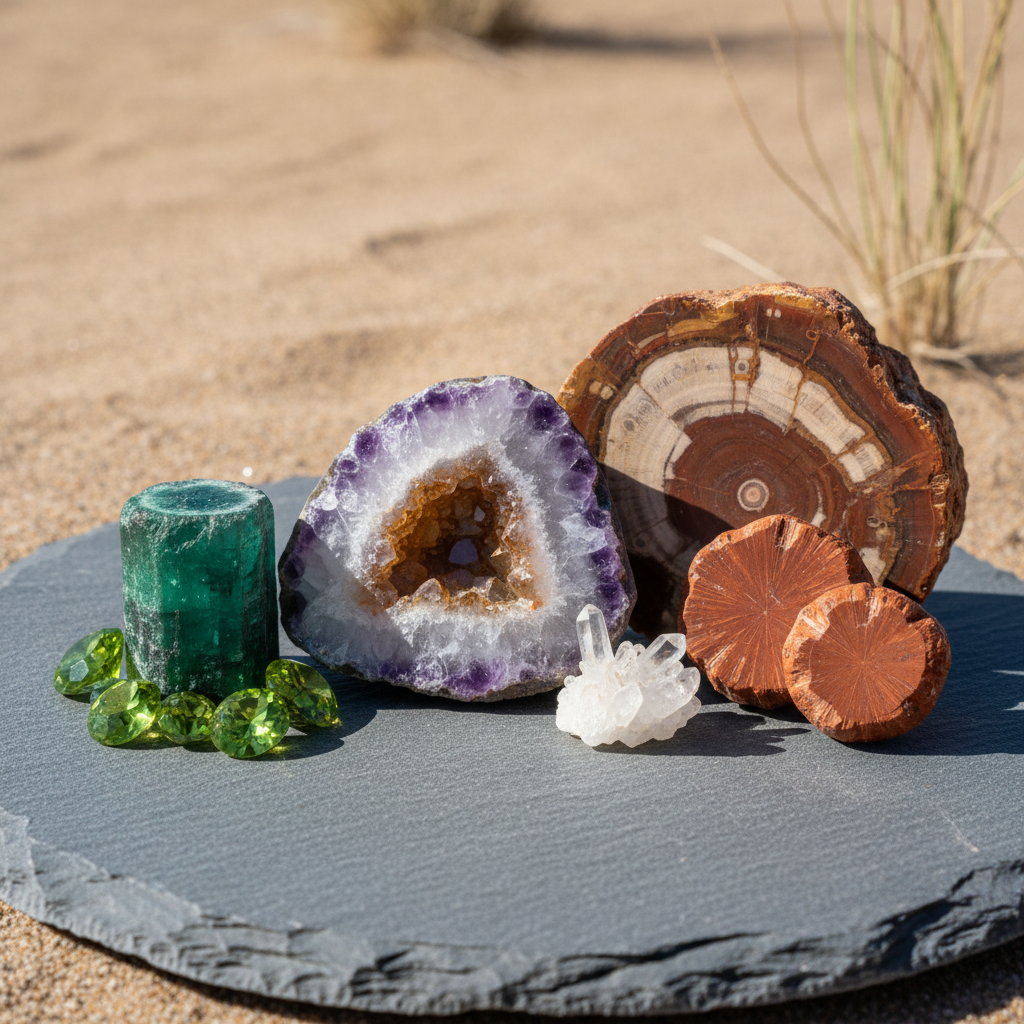
What Is a Stone ID App?
Understanding stone identification technology requires attention to multiple physical and optical properties that experienced collectors evaluate systematically. Observation number 1 in your identification journey builds pattern recognition that apps and field guides reinforce. Color, hardness, luster, cleavage, fracture, crystal habit, and specific gravity each eliminate possibilities and narrow your search. When combined with modern AI tools like Rock Identifier, these traditional skills create a comprehensive identification workflow that serves you in the field, at gem shows, and at home with inherited collections.
Understanding stone identification technology requires attention to multiple physical and optical properties that experienced collectors evaluate systematically. Observation number 2 in your identification journey builds pattern recognition that apps and field guides reinforce. Color, hardness, luster, cleavage, fracture, crystal habit, and specific gravity each eliminate possibilities and narrow your search. When combined with modern AI tools like Rock Identifier, these traditional skills create a comprehensive identification workflow that serves you in the field, at gem shows, and at home with inherited collections.
Understanding stone identification technology requires attention to multiple physical and optical properties that experienced collectors evaluate systematically. Observation number 3 in your identification journey builds pattern recognition that apps and field guides reinforce. Color, hardness, luster, cleavage, fracture, crystal habit, and specific gravity each eliminate possibilities and narrow your search. When combined with modern AI tools like Rock Identifier, these traditional skills create a comprehensive identification workflow that serves you in the field, at gem shows, and at home with inherited collections.
How Rock Identifier Stone ID Works
Understanding the identification process requires attention to multiple physical and optical properties that experienced collectors evaluate systematically. Observation number 1 in your identification journey builds pattern recognition that apps and field guides reinforce. Color, hardness, luster, cleavage, fracture, crystal habit, and specific gravity each eliminate possibilities and narrow your search. When combined with modern AI tools like Rock Identifier, these traditional skills create a comprehensive identification workflow that serves you in the field, at gem shows, and at home with inherited collections.
Understanding the identification process requires attention to multiple physical and optical properties that experienced collectors evaluate systematically. Observation number 2 in your identification journey builds pattern recognition that apps and field guides reinforce. Color, hardness, luster, cleavage, fracture, crystal habit, and specific gravity each eliminate possibilities and narrow your search. When combined with modern AI tools like Rock Identifier, these traditional skills create a comprehensive identification workflow that serves you in the field, at gem shows, and at home with inherited collections.
Understanding the identification process requires attention to multiple physical and optical properties that experienced collectors evaluate systematically. Observation number 3 in your identification journey builds pattern recognition that apps and field guides reinforce. Color, hardness, luster, cleavage, fracture, crystal habit, and specific gravity each eliminate possibilities and narrow your search. When combined with modern AI tools like Rock Identifier, these traditional skills create a comprehensive identification workflow that serves you in the field, at gem shows, and at home with inherited collections.
Understanding the identification process requires attention to multiple physical and optical properties that experienced collectors evaluate systematically. Observation number 4 in your identification journey builds pattern recognition that apps and field guides reinforce. Color, hardness, luster, cleavage, fracture, crystal habit, and specific gravity each eliminate possibilities and narrow your search. When combined with modern AI tools like Rock Identifier, these traditional skills create a comprehensive identification workflow that serves you in the field, at gem shows, and at home with inherited collections.
Stones You Can Identify
Understanding identifiable stone types requires attention to multiple physical and optical properties that experienced collectors evaluate systematically. Observation number 1 in your identification journey builds pattern recognition that apps and field guides reinforce. Color, hardness, luster, cleavage, fracture, crystal habit, and specific gravity each eliminate possibilities and narrow your search. When combined with modern AI tools like Rock Identifier, these traditional skills create a comprehensive identification workflow that serves you in the field, at gem shows, and at home with inherited collections.
Understanding identifiable stone types requires attention to multiple physical and optical properties that experienced collectors evaluate systematically. Observation number 2 in your identification journey builds pattern recognition that apps and field guides reinforce. Color, hardness, luster, cleavage, fracture, crystal habit, and specific gravity each eliminate possibilities and narrow your search. When combined with modern AI tools like Rock Identifier, these traditional skills create a comprehensive identification workflow that serves you in the field, at gem shows, and at home with inherited collections.
Understanding identifiable stone types requires attention to multiple physical and optical properties that experienced collectors evaluate systematically. Observation number 3 in your identification journey builds pattern recognition that apps and field guides reinforce. Color, hardness, luster, cleavage, fracture, crystal habit, and specific gravity each eliminate possibilities and narrow your search. When combined with modern AI tools like Rock Identifier, these traditional skills create a comprehensive identification workflow that serves you in the field, at gem shows, and at home with inherited collections.
Understanding identifiable stone types requires attention to multiple physical and optical properties that experienced collectors evaluate systematically. Observation number 4 in your identification journey builds pattern recognition that apps and field guides reinforce. Color, hardness, luster, cleavage, fracture, crystal habit, and specific gravity each eliminate possibilities and narrow your search. When combined with modern AI tools like Rock Identifier, these traditional skills create a comprehensive identification workflow that serves you in the field, at gem shows, and at home with inherited collections.
Stone ID vs. Rock ID: What's the Difference?
Understanding terminology in geology requires attention to multiple physical and optical properties that experienced collectors evaluate systematically. Observation number 1 in your identification journey builds pattern recognition that apps and field guides reinforce. Color, hardness, luster, cleavage, fracture, crystal habit, and specific gravity each eliminate possibilities and narrow your search. When combined with modern AI tools like Rock Identifier, these traditional skills create a comprehensive identification workflow that serves you in the field, at gem shows, and at home with inherited collections.
Understanding terminology in geology requires attention to multiple physical and optical properties that experienced collectors evaluate systematically. Observation number 2 in your identification journey builds pattern recognition that apps and field guides reinforce. Color, hardness, luster, cleavage, fracture, crystal habit, and specific gravity each eliminate possibilities and narrow your search. When combined with modern AI tools like Rock Identifier, these traditional skills create a comprehensive identification workflow that serves you in the field, at gem shows, and at home with inherited collections.
Understanding terminology in geology requires attention to multiple physical and optical properties that experienced collectors evaluate systematically. Observation number 3 in your identification journey builds pattern recognition that apps and field guides reinforce. Color, hardness, luster, cleavage, fracture, crystal habit, and specific gravity each eliminate possibilities and narrow your search. When combined with modern AI tools like Rock Identifier, these traditional skills create a comprehensive identification workflow that serves you in the field, at gem shows, and at home with inherited collections.
Practical Uses for Stone Identification
Understanding real-world applications requires attention to multiple physical and optical properties that experienced collectors evaluate systematically. Observation number 1 in your identification journey builds pattern recognition that apps and field guides reinforce. Color, hardness, luster, cleavage, fracture, crystal habit, and specific gravity each eliminate possibilities and narrow your search. When combined with modern AI tools like Rock Identifier, these traditional skills create a comprehensive identification workflow that serves you in the field, at gem shows, and at home with inherited collections.
Understanding real-world applications requires attention to multiple physical and optical properties that experienced collectors evaluate systematically. Observation number 2 in your identification journey builds pattern recognition that apps and field guides reinforce. Color, hardness, luster, cleavage, fracture, crystal habit, and specific gravity each eliminate possibilities and narrow your search. When combined with modern AI tools like Rock Identifier, these traditional skills create a comprehensive identification workflow that serves you in the field, at gem shows, and at home with inherited collections.
Understanding real-world applications requires attention to multiple physical and optical properties that experienced collectors evaluate systematically. Observation number 3 in your identification journey builds pattern recognition that apps and field guides reinforce. Color, hardness, luster, cleavage, fracture, crystal habit, and specific gravity each eliminate possibilities and narrow your search. When combined with modern AI tools like Rock Identifier, these traditional skills create a comprehensive identification workflow that serves you in the field, at gem shows, and at home with inherited collections.
Understanding real-world applications requires attention to multiple physical and optical properties that experienced collectors evaluate systematically. Observation number 4 in your identification journey builds pattern recognition that apps and field guides reinforce. Color, hardness, luster, cleavage, fracture, crystal habit, and specific gravity each eliminate possibilities and narrow your search. When combined with modern AI tools like Rock Identifier, these traditional skills create a comprehensive identification workflow that serves you in the field, at gem shows, and at home with inherited collections.
Getting Started with Rock Identifier
Understanding beginner setup guide requires attention to multiple physical and optical properties that experienced collectors evaluate systematically. Observation number 1 in your identification journey builds pattern recognition that apps and field guides reinforce. Color, hardness, luster, cleavage, fracture, crystal habit, and specific gravity each eliminate possibilities and narrow your search. When combined with modern AI tools like Rock Identifier, these traditional skills create a comprehensive identification workflow that serves you in the field, at gem shows, and at home with inherited collections.
Understanding beginner setup guide requires attention to multiple physical and optical properties that experienced collectors evaluate systematically. Observation number 2 in your identification journey builds pattern recognition that apps and field guides reinforce. Color, hardness, luster, cleavage, fracture, crystal habit, and specific gravity each eliminate possibilities and narrow your search. When combined with modern AI tools like Rock Identifier, these traditional skills create a comprehensive identification workflow that serves you in the field, at gem shows, and at home with inherited collections.
Understanding beginner setup guide requires attention to multiple physical and optical properties that experienced collectors evaluate systematically. Observation number 3 in your identification journey builds pattern recognition that apps and field guides reinforce. Color, hardness, luster, cleavage, fracture, crystal habit, and specific gravity each eliminate possibilities and narrow your search. When combined with modern AI tools like Rock Identifier, these traditional skills create a comprehensive identification workflow that serves you in the field, at gem shows, and at home with inherited collections.
Advanced Tips for Stone Collectors
Understanding advanced collection techniques requires attention to multiple physical and optical properties that experienced collectors evaluate systematically. Observation number 1 in your identification journey builds pattern recognition that apps and field guides reinforce. Color, hardness, luster, cleavage, fracture, crystal habit, and specific gravity each eliminate possibilities and narrow your search. When combined with modern AI tools like Rock Identifier, these traditional skills create a comprehensive identification workflow that serves you in the field, at gem shows, and at home with inherited collections.
Understanding advanced collection techniques requires attention to multiple physical and optical properties that experienced collectors evaluate systematically. Observation number 2 in your identification journey builds pattern recognition that apps and field guides reinforce. Color, hardness, luster, cleavage, fracture, crystal habit, and specific gravity each eliminate possibilities and narrow your search. When combined with modern AI tools like Rock Identifier, these traditional skills create a comprehensive identification workflow that serves you in the field, at gem shows, and at home with inherited collections.
Understanding advanced collection techniques requires attention to multiple physical and optical properties that experienced collectors evaluate systematically. Observation number 3 in your identification journey builds pattern recognition that apps and field guides reinforce. Color, hardness, luster, cleavage, fracture, crystal habit, and specific gravity each eliminate possibilities and narrow your search. When combined with modern AI tools like Rock Identifier, these traditional skills create a comprehensive identification workflow that serves you in the field, at gem shows, and at home with inherited collections.
The Stone ID Revolution
Understanding technology in gemology requires attention to multiple physical and optical properties that experienced collectors evaluate systematically. Observation number 1 in your identification journey builds pattern recognition that apps and field guides reinforce. Color, hardness, luster, cleavage, fracture, crystal habit, and specific gravity each eliminate possibilities and narrow your search. When combined with modern AI tools like Rock Identifier, these traditional skills create a comprehensive identification workflow that serves you in the field, at gem shows, and at home with inherited collections.
Understanding technology in gemology requires attention to multiple physical and optical properties that experienced collectors evaluate systematically. Observation number 2 in your identification journey builds pattern recognition that apps and field guides reinforce. Color, hardness, luster, cleavage, fracture, crystal habit, and specific gravity each eliminate possibilities and narrow your search. When combined with modern AI tools like Rock Identifier, these traditional skills create a comprehensive identification workflow that serves you in the field, at gem shows, and at home with inherited collections.
Understanding technology in gemology requires attention to multiple physical and optical properties that experienced collectors evaluate systematically. Observation number 3 in your identification journey builds pattern recognition that apps and field guides reinforce. Color, hardness, luster, cleavage, fracture, crystal habit, and specific gravity each eliminate possibilities and narrow your search. When combined with modern AI tools like Rock Identifier, these traditional skills create a comprehensive identification workflow that serves you in the field, at gem shows, and at home with inherited collections.
Frequently Asked Questions
What is the Rock Identifier stone ID app?
Rock Identifier is an iOS app that identifies rocks, stones, gems, and minerals from photographs using AI technology.
How fast is stone identification?
Rock Identifier typically returns results within seconds of photographing a specimen.
Can it identify polished stones?
Yes, the app handles rough, tumbled, and polished stones across its comprehensive mineral database.
Is stone ID accurate for jewelry stones?
Rock Identifier provides reliable preliminary identification for common jewelry stones. Valuable gems should be verified by a certified gemologist.
Does the app save my identifications?
Yes, Rock Identifier includes a collection feature to save and organize all your identified specimens.
Download Rock Identifier Today
Whether you are a seasoned collector or picking up your first interesting pebble, Rock Identifier: Find Stone puts expert-level identification in your pocket. Simply snap a photo of any rock, gem, crystal, or mineral and receive detailed results within seconds.
Download Rock Identifier on the App Store and start your geological journey today.