
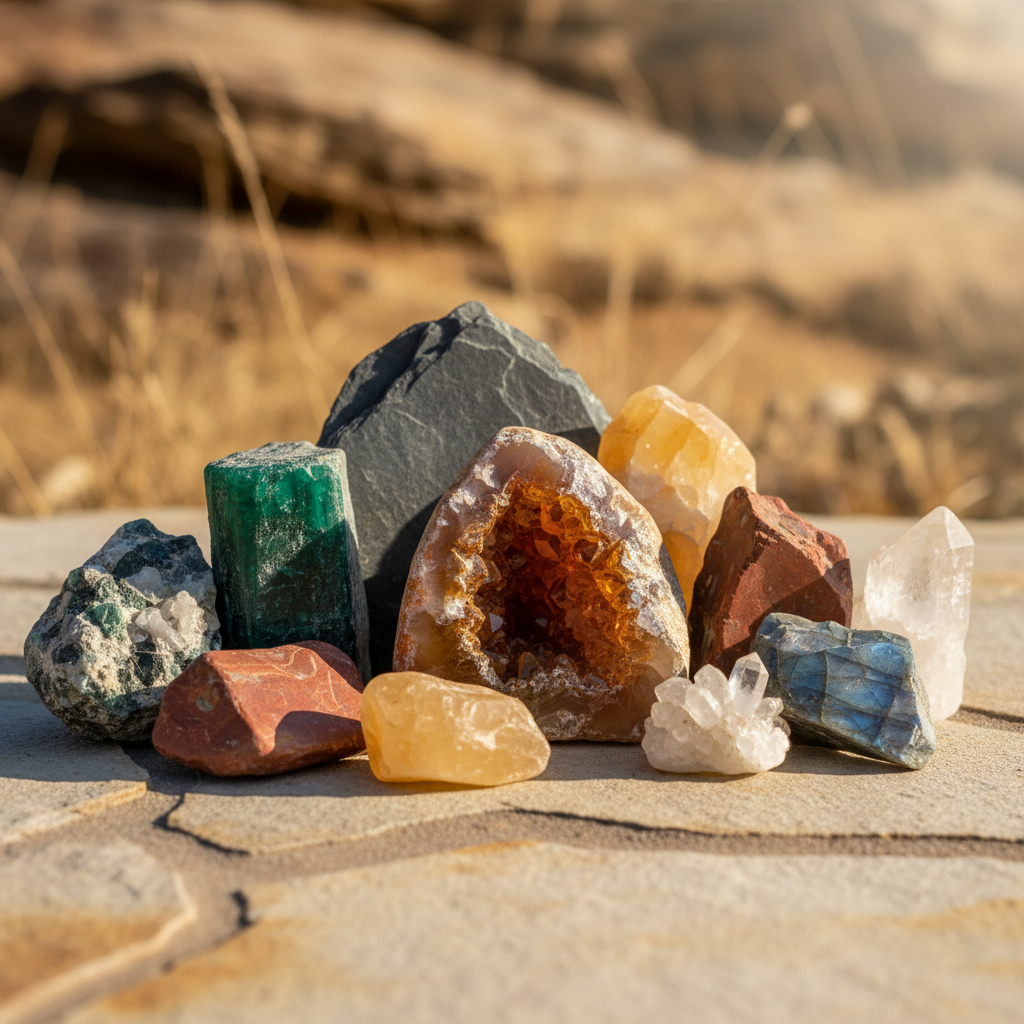
What Is a Rock Identifier App?
A rock identifier app transforms your smartphone into a portable mineralogy lab. Instead of carrying heavy field guides and reference books, you point your camera at a specimen and receive an identification backed by artificial intelligence and extensive geological databases. The Rock Identifier app has emerged as one of the most popular tools in this category, helping thousands of collectors, students, and outdoor enthusiasts name the stones they encounter every day.
The concept is straightforward but the technology behind it is remarkably sophisticated. Modern rock identification apps analyze visual characteristics including color, transparency, crystal habit, surface texture, fracture patterns, and luster. They compare these features against catalogs containing thousands of known minerals, gemstones, and rock types. The best apps, including Rock Identifier, go further by providing educational context about each specimen's geological formation, hardness on the Mohs scale, and common locations where it is found.
For anyone who has ever picked up an interesting stone on a beach, trail, or construction site and wondered what it was, a rock identifier app eliminates the guesswork. You no longer need years of formal training to get a reliable starting point for identification. The app serves as your first expert opinion, which you can then verify through additional testing or consultation with a professional geologist.
How Rock Identifier Works
Rock Identifier uses advanced computer vision and machine learning models trained on vast datasets of geological specimens. When you photograph a rock or mineral, the app processes the image through multiple analysis layers. It examines macroscopic features visible to the camera and matches them against patterns learned from verified specimens in its training data.
The identification process typically takes just a few seconds. Results include the most likely mineral or rock name, a confidence indicator, and a detailed profile covering physical properties. You will see information about chemical composition where relevant, crystal system classification, typical hardness, and distinguishing features that separate similar-looking specimens.
One of the app's greatest strengths is its ability to handle the ambiguity inherent in geological identification. Many minerals share visual similarities — think of the countless stones that appear as generic gray rocks until you examine them closely. Rock Identifier often provides multiple possible matches ranked by likelihood, along with tips for distinguishing between them using simple field tests you can perform at home.
Key Features That Set Rock Identifier Apart
Rock Identifier offers a comprehensive suite of features designed for both casual users and dedicated collectors. The core photo identification engine supports rocks, minerals, crystals, and gemstones in various conditions — rough, tumbled, polished, or still embedded in matrix. This versatility matters because the specimens you encounter in the field rarely look like the pristine samples in textbook photographs.
The app includes a personal collection feature that lets you save every identification along with the original photo, date, and optional location notes. Over time, this builds into a valuable digital catalog of your finds. For serious rockhounds, this collection tracker becomes an indispensable field journal that would otherwise require handwritten logs and separate photo albums.
Educational content accompanies every identification. Rather than simply giving you a name, Rock Identifier explains why your specimen matches that classification. You learn about the mineral's formation environment — whether it crystallized from magma, precipitated from hydrothermal solutions, or formed through metamorphic processes. This transforms each identification into a micro-lesson in geology.
The interface is designed for field use with large buttons, clear typography, and a workflow that gets you from photo to result in minimal taps. When you are on a sunlit trail with gloves on and limited patience for fiddly apps, this streamlined experience makes a genuine difference.
Who Benefits from Using Rock Identifier?
Rock Identifier serves a remarkably diverse audience. Elementary school teachers use it to make geology lessons tangible, letting students identify specimens they bring from home. University geology students supplement their coursework by testing identifications against what they learn in mineralogy labs. Park rangers and nature center staff recommend it to visitors who find interesting stones on trails.
Jewelry makers and lapidary artists use the app to identify rough material before cutting. Knowing whether a stone is agate, jasper, or another cryptocrystalline silica variety affects how you approach the slab on your saw. Collectors building reference sets use it to catalog estate sale finds and inherited collections where provenance is unknown.
Parents hiking with curious children find the app transforms a ordinary walk into a treasure hunt. Each interesting pebble becomes a learning opportunity. The app answers the inevitable question — what is this? — with accuracy and depth that goes far beyond a quick internet search.
Even experienced geologists appreciate having a quick reference in their pocket. While no app replaces professional testing with refractometers, spectrometers, or X-ray diffraction, it provides a fast preliminary identification that guides which confirmatory tests are worth performing.
Tips for Getting the Best Identification Results
Photography technique significantly affects identification accuracy. Start with good lighting — natural daylight is ideal, but avoid harsh direct sun that washes out color. Place your specimen on a neutral background such as white paper or gray stone. Fill the frame with the specimen while keeping the entire object in focus.
Capture multiple angles when possible. Show the specimen's freshest fracture surface alongside any weathered exterior. Crystal faces, if visible, should be prominently featured. For translucent or transparent minerals, a backlit photo revealing internal structure can dramatically improve results.
Clean the specimen gently before photographing. Dust, mud, and water films obscure the surface features that the AI relies upon. A quick rinse and pat-dry with a cloth is usually sufficient. Avoid using chemicals or abrasive cleaning unless you know the specimen can tolerate it.
Include a size reference in at least one photo. A coin, ruler, or common object helps the algorithm calibrate scale-dependent features. While Rock Identifier can identify many specimens without scale reference, including one removes an important source of ambiguity.
When results seem uncertain, use the app's suggested field tests. A simple hardness test with a steel nail or copper penny, a streak test on unglazed porcelain, or checking whether the specimen fizzes in dilute acid can confirm or rule out possibilities the app presents.
Understanding Identification Limitations
No rock identifier app, including Rock Identifier, can guarantee 100 percent accuracy in every situation. Geological identification is inherently complex because nature produces enormous variation within mineral species. Trace elements change colors, formation conditions alter crystal habits, and weathering transforms surfaces beyond recognition.
The app excels at identifying common specimens with distinctive visual features. Quartz varieties, popular gemstones, widespread ore minerals, and classic rock types achieve the highest accuracy rates. Rare minerals, poorly preserved specimens, and stones that have been heavily treated or dyed present greater challenges.
Treat app identifications as educated starting points rather than definitive certifications. For valuable specimens, specimens intended for commercial sale, or academic research, confirm app results through professional gemological testing. Rock Identifier itself encourages this approach by providing enough detail for you to understand why a particular identification was suggested and what additional evidence would confirm it.
The app improves continuously as its training data expands and its algorithms refine. Regular updates bring new specimens, improved accuracy, and enhanced educational content. Keeping the app updated ensures you benefit from the latest improvements.
Rock Identifier vs. Traditional Field Guides
Traditional field guides remain valuable references, but they carry limitations that apps address. A physical guide covers a finite number of species limited by page count. Rock Identifier's database encompasses thousands of entries and grows over time without adding weight to your pack.
Field guides require you to manually navigate decision trees — checking hardness, then luster, then streak color in sequence. This systematic approach builds geological thinking skills but takes time. The app accelerates this process by simultaneously weighing multiple characteristics and presenting ranked results.
However, the best approach combines both tools. Use Rock Identifier for rapid field identification, then consult a quality field guide to deepen your understanding. The app tells you what you found; the guide teaches you why it forms where it does and what makes it geologically significant.
Many collectors report that using an identification app actually motivates them to learn traditional identification skills. When the app names a specimen, curiosity drives further research into its crystal structure, chemical formula, and role in Earth's geological history.
Building Your Collection with Rock Identifier
The collection feature transforms casual finding into intentional collecting. Each saved identification becomes a record with photographic evidence, timestamp, and detailed mineralogical information. You can review your collection chronologically, watching your knowledge and finds accumulate over seasons of rockhounding.
Organize your collection by location to build a geographic reference. Specimens from a favorite beach, mountain trail, or roadside cut gain additional meaning when you can see them grouped together. Over time, you develop an intuitive sense of what minerals occur in your local geology.
Share interesting finds with the rockhounding community through social media or local gem and mineral clubs. Having a detailed identification from Rock Identifier gives your posts credibility and sparks educational conversations. Fellow collectors appreciate knowing exactly what you found and where.
For educators, the collection feature supports classroom projects. Students can each build personal catalogs throughout a semester, culminating in presentations about their most interesting specimens. The app handles identification while students focus on research and presentation skills.
The Future of AI-Powered Geology
Artificial intelligence is reshaping how we interact with the natural world, and geology is no exception. Rock Identifier represents the current state of the art, but the trajectory points toward even more capable tools. Future versions may incorporate spectroscopic analysis through specialized phone attachments, augmented reality overlays that label minerals in real time, and community-verified identification networks.
The democratization of geological knowledge benefits everyone. When anyone with a smartphone can identify minerals accurately, public appreciation for Earth science grows. Conservation efforts gain allies who understand what makes a landscape geologically unique. Young people discover career paths in geology, gemology, and environmental science through apps that make the subject accessible and exciting.
Rock Identifier is not just a tool — it is an invitation to see the ground beneath your feet with new eyes. Every sidewalk, riverbank, and mountain trail becomes a gallery of geological wonders waiting to be named and understood.
Frequently Asked Questions
Is Rock Identifier free to download?
Rock Identifier is free to download on the App Store. The app provides rock, gem, and mineral identification from photos with detailed results for each specimen you scan.
How accurate is the Rock Identifier app?
Rock Identifier achieves high accuracy on common specimens with clear visual features. For rare minerals or heavily weathered samples, it provides ranked possibilities and suggests confirmatory field tests. Always verify valuable specimens with professional testing.
What types of stones can Rock Identifier identify?
The app identifies rocks, minerals, crystals, gemstones, and ores. It handles rough, polished, and tumbled specimens across a database of thousands of entries.
Does Rock Identifier work offline?
Saved identifications and collection entries are accessible offline. New photo identifications require an internet connection for AI processing.
Can I use Rock Identifier for educational purposes?
Absolutely. Teachers, students, and nature educators use Rock Identifier for classroom geology lessons, field trips, and science fair projects.
Download Rock Identifier Today
Whether you are a seasoned collector or picking up your first interesting pebble, Rock Identifier: Find Stone puts expert-level identification in your pocket. Simply snap a photo of any rock, gem, crystal, or mineral and receive detailed results within seconds.
The app covers thousands of specimens with information on hardness, luster, crystal structure, formation, and geographic origins. Save your finds to build a personal collection and learn something new with every identification.
Download Rock Identifier on the App Store and start your geological journey today.