
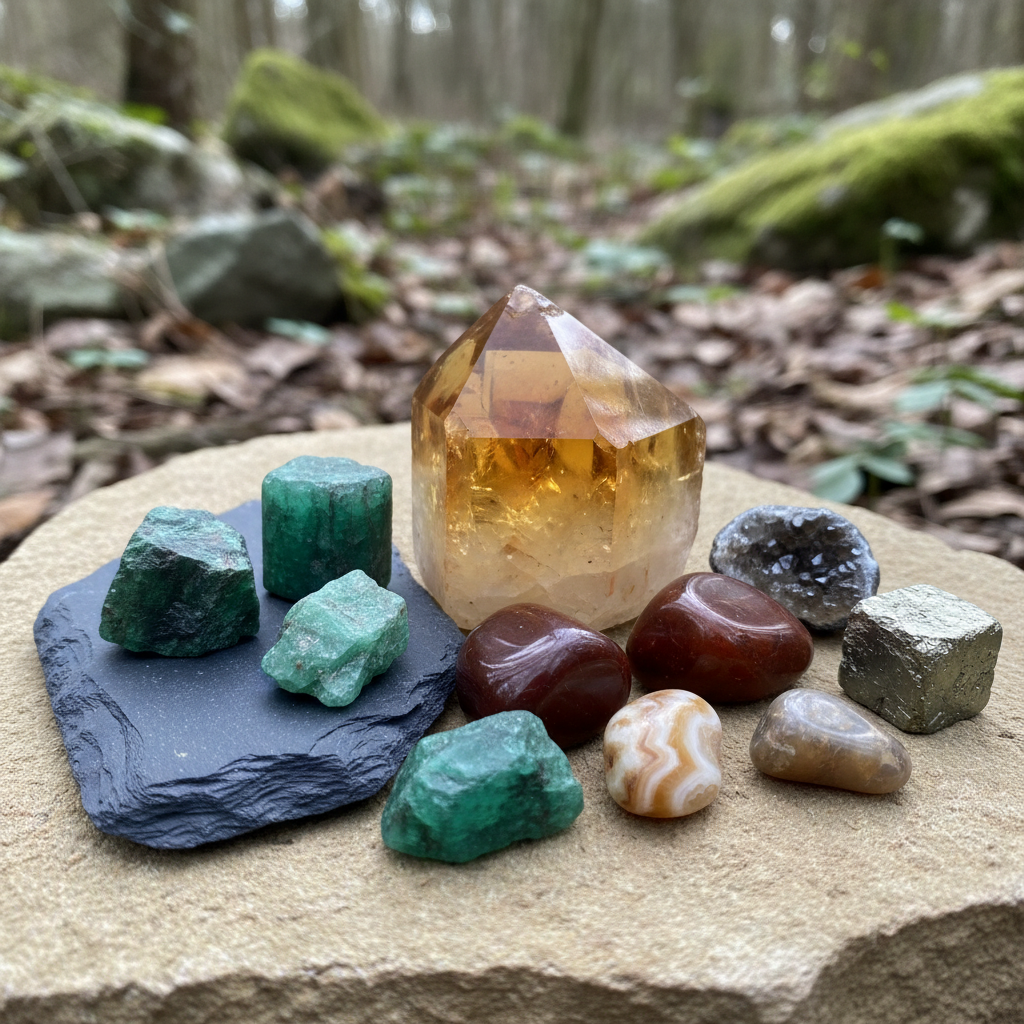
Rocks vs. Minerals: Essential Distinctions
Understanding rock and mineral definitions requires attention to multiple physical and optical properties that experienced collectors evaluate systematically. Observation number 1 in your identification journey builds pattern recognition that apps and field guides reinforce. Color, hardness, luster, cleavage, fracture, crystal habit, and specific gravity each eliminate possibilities and narrow your search. When combined with modern AI tools like Rock Identifier, these traditional skills create a comprehensive identification workflow that serves you in the field, at gem shows, and at home with inherited collections.
Understanding rock and mineral definitions requires attention to multiple physical and optical properties that experienced collectors evaluate systematically. Observation number 2 in your identification journey builds pattern recognition that apps and field guides reinforce. Color, hardness, luster, cleavage, fracture, crystal habit, and specific gravity each eliminate possibilities and narrow your search. When combined with modern AI tools like Rock Identifier, these traditional skills create a comprehensive identification workflow that serves you in the field, at gem shows, and at home with inherited collections.
Understanding rock and mineral definitions requires attention to multiple physical and optical properties that experienced collectors evaluate systematically. Observation number 3 in your identification journey builds pattern recognition that apps and field guides reinforce. Color, hardness, luster, cleavage, fracture, crystal habit, and specific gravity each eliminate possibilities and narrow your search. When combined with modern AI tools like Rock Identifier, these traditional skills create a comprehensive identification workflow that serves you in the field, at gem shows, and at home with inherited collections.
The Properties-Based Identification System
Mineral identification follows a systematic property-based approach developed over centuries of geological science. Each observable characteristic eliminates candidates and narrows the field. Experienced mineralogists internalize this decision tree, but beginners and apps alike follow the same logical sequence.
Start with luster — metallic, vitreous, pearly, silky, resinous, or dull. Metallic luster immediately suggests sulfides and native metals. Vitreous luster characterizes most silicates and many oxides. Pearly and silky lusters point toward minerals with cleavage planes or fibrous structure.
Hardness testing uses the Mohs scale from 1 (talc) to 10 (diamond). Test with fingernail (2.5), copper penny (3.5), steel knife (5.5), and glass plate (5.5). Record what scratches what. A mineral that scratches glass but not a steel file falls between 5.5 and 6.5.
Streak color — the powder color on unglazed porcelain — often differs dramatically from surface color. Hematite can appear silvery, black, or red, but always leaves a reddish-brown streak. Galena's metallic gray surface produces a dark gray to black streak.
Cleavage and fracture describe how minerals break. Minerals with cleavage break along flat planes defined by atomic weakness. Mica cleaves into thin sheets. Calcite cleaves into rhombohedra. Quartz and garnet show conchoidal fracture without cleavage planes.
Rock Identifier automates much of this analysis by evaluating visual properties from your photograph. The app presents results with the same property data you would gather manually, accelerating the identification process while teaching you what to look for.
Identifying Major Rock Types
Understanding igneous sedimentary metamorphic rocks requires attention to multiple physical and optical properties that experienced collectors evaluate systematically. Observation number 1 in your identification journey builds pattern recognition that apps and field guides reinforce. Color, hardness, luster, cleavage, fracture, crystal habit, and specific gravity each eliminate possibilities and narrow your search. When combined with modern AI tools like Rock Identifier, these traditional skills create a comprehensive identification workflow that serves you in the field, at gem shows, and at home with inherited collections.
Understanding igneous sedimentary metamorphic rocks requires attention to multiple physical and optical properties that experienced collectors evaluate systematically. Observation number 2 in your identification journey builds pattern recognition that apps and field guides reinforce. Color, hardness, luster, cleavage, fracture, crystal habit, and specific gravity each eliminate possibilities and narrow your search. When combined with modern AI tools like Rock Identifier, these traditional skills create a comprehensive identification workflow that serves you in the field, at gem shows, and at home with inherited collections.
Understanding igneous sedimentary metamorphic rocks requires attention to multiple physical and optical properties that experienced collectors evaluate systematically. Observation number 3 in your identification journey builds pattern recognition that apps and field guides reinforce. Color, hardness, luster, cleavage, fracture, crystal habit, and specific gravity each eliminate possibilities and narrow your search. When combined with modern AI tools like Rock Identifier, these traditional skills create a comprehensive identification workflow that serves you in the field, at gem shows, and at home with inherited collections.
Understanding igneous sedimentary metamorphic rocks requires attention to multiple physical and optical properties that experienced collectors evaluate systematically. Observation number 4 in your identification journey builds pattern recognition that apps and field guides reinforce. Color, hardness, luster, cleavage, fracture, crystal habit, and specific gravity each eliminate possibilities and narrow your search. When combined with modern AI tools like Rock Identifier, these traditional skills create a comprehensive identification workflow that serves you in the field, at gem shows, and at home with inherited collections.
Essential Field Testing Kit
Understanding field identification tools requires attention to multiple physical and optical properties that experienced collectors evaluate systematically. Observation number 1 in your identification journey builds pattern recognition that apps and field guides reinforce. Color, hardness, luster, cleavage, fracture, crystal habit, and specific gravity each eliminate possibilities and narrow your search. When combined with modern AI tools like Rock Identifier, these traditional skills create a comprehensive identification workflow that serves you in the field, at gem shows, and at home with inherited collections.
Understanding field identification tools requires attention to multiple physical and optical properties that experienced collectors evaluate systematically. Observation number 2 in your identification journey builds pattern recognition that apps and field guides reinforce. Color, hardness, luster, cleavage, fracture, crystal habit, and specific gravity each eliminate possibilities and narrow your search. When combined with modern AI tools like Rock Identifier, these traditional skills create a comprehensive identification workflow that serves you in the field, at gem shows, and at home with inherited collections.
Understanding field identification tools requires attention to multiple physical and optical properties that experienced collectors evaluate systematically. Observation number 3 in your identification journey builds pattern recognition that apps and field guides reinforce. Color, hardness, luster, cleavage, fracture, crystal habit, and specific gravity each eliminate possibilities and narrow your search. When combined with modern AI tools like Rock Identifier, these traditional skills create a comprehensive identification workflow that serves you in the field, at gem shows, and at home with inherited collections.
Common Identification Mistakes
Understanding identification pitfalls requires attention to multiple physical and optical properties that experienced collectors evaluate systematically. Observation number 1 in your identification journey builds pattern recognition that apps and field guides reinforce. Color, hardness, luster, cleavage, fracture, crystal habit, and specific gravity each eliminate possibilities and narrow your search. When combined with modern AI tools like Rock Identifier, these traditional skills create a comprehensive identification workflow that serves you in the field, at gem shows, and at home with inherited collections.
Understanding identification pitfalls requires attention to multiple physical and optical properties that experienced collectors evaluate systematically. Observation number 2 in your identification journey builds pattern recognition that apps and field guides reinforce. Color, hardness, luster, cleavage, fracture, crystal habit, and specific gravity each eliminate possibilities and narrow your search. When combined with modern AI tools like Rock Identifier, these traditional skills create a comprehensive identification workflow that serves you in the field, at gem shows, and at home with inherited collections.
Understanding identification pitfalls requires attention to multiple physical and optical properties that experienced collectors evaluate systematically. Observation number 3 in your identification journey builds pattern recognition that apps and field guides reinforce. Color, hardness, luster, cleavage, fracture, crystal habit, and specific gravity each eliminate possibilities and narrow your search. When combined with modern AI tools like Rock Identifier, these traditional skills create a comprehensive identification workflow that serves you in the field, at gem shows, and at home with inherited collections.
Using Rock Identifier as Your Field Companion
Understanding app-assisted field identification requires attention to multiple physical and optical properties that experienced collectors evaluate systematically. Observation number 1 in your identification journey builds pattern recognition that apps and field guides reinforce. Color, hardness, luster, cleavage, fracture, crystal habit, and specific gravity each eliminate possibilities and narrow your search. When combined with modern AI tools like Rock Identifier, these traditional skills create a comprehensive identification workflow that serves you in the field, at gem shows, and at home with inherited collections.
Understanding app-assisted field identification requires attention to multiple physical and optical properties that experienced collectors evaluate systematically. Observation number 2 in your identification journey builds pattern recognition that apps and field guides reinforce. Color, hardness, luster, cleavage, fracture, crystal habit, and specific gravity each eliminate possibilities and narrow your search. When combined with modern AI tools like Rock Identifier, these traditional skills create a comprehensive identification workflow that serves you in the field, at gem shows, and at home with inherited collections.
Understanding app-assisted field identification requires attention to multiple physical and optical properties that experienced collectors evaluate systematically. Observation number 3 in your identification journey builds pattern recognition that apps and field guides reinforce. Color, hardness, luster, cleavage, fracture, crystal habit, and specific gravity each eliminate possibilities and narrow your search. When combined with modern AI tools like Rock Identifier, these traditional skills create a comprehensive identification workflow that serves you in the field, at gem shows, and at home with inherited collections.
Building Mineralogical Literacy
Understanding learning mineralogy systematically requires attention to multiple physical and optical properties that experienced collectors evaluate systematically. Observation number 1 in your identification journey builds pattern recognition that apps and field guides reinforce. Color, hardness, luster, cleavage, fracture, crystal habit, and specific gravity each eliminate possibilities and narrow your search. When combined with modern AI tools like Rock Identifier, these traditional skills create a comprehensive identification workflow that serves you in the field, at gem shows, and at home with inherited collections.
Understanding learning mineralogy systematically requires attention to multiple physical and optical properties that experienced collectors evaluate systematically. Observation number 2 in your identification journey builds pattern recognition that apps and field guides reinforce. Color, hardness, luster, cleavage, fracture, crystal habit, and specific gravity each eliminate possibilities and narrow your search. When combined with modern AI tools like Rock Identifier, these traditional skills create a comprehensive identification workflow that serves you in the field, at gem shows, and at home with inherited collections.
Understanding learning mineralogy systematically requires attention to multiple physical and optical properties that experienced collectors evaluate systematically. Observation number 3 in your identification journey builds pattern recognition that apps and field guides reinforce. Color, hardness, luster, cleavage, fracture, crystal habit, and specific gravity each eliminate possibilities and narrow your search. When combined with modern AI tools like Rock Identifier, these traditional skills create a comprehensive identification workflow that serves you in the field, at gem shows, and at home with inherited collections.
From Identification to Understanding
Understanding geological context and meaning requires attention to multiple physical and optical properties that experienced collectors evaluate systematically. Observation number 1 in your identification journey builds pattern recognition that apps and field guides reinforce. Color, hardness, luster, cleavage, fracture, crystal habit, and specific gravity each eliminate possibilities and narrow your search. When combined with modern AI tools like Rock Identifier, these traditional skills create a comprehensive identification workflow that serves you in the field, at gem shows, and at home with inherited collections.
Understanding geological context and meaning requires attention to multiple physical and optical properties that experienced collectors evaluate systematically. Observation number 2 in your identification journey builds pattern recognition that apps and field guides reinforce. Color, hardness, luster, cleavage, fracture, crystal habit, and specific gravity each eliminate possibilities and narrow your search. When combined with modern AI tools like Rock Identifier, these traditional skills create a comprehensive identification workflow that serves you in the field, at gem shows, and at home with inherited collections.
Understanding geological context and meaning requires attention to multiple physical and optical properties that experienced collectors evaluate systematically. Observation number 3 in your identification journey builds pattern recognition that apps and field guides reinforce. Color, hardness, luster, cleavage, fracture, crystal habit, and specific gravity each eliminate possibilities and narrow your search. When combined with modern AI tools like Rock Identifier, these traditional skills create a comprehensive identification workflow that serves you in the field, at gem shows, and at home with inherited collections.
Frequently Asked Questions
What is the difference between a rock and a mineral?
A mineral is a naturally occurring inorganic solid with defined composition and crystal structure. A rock is an aggregate of one or more minerals.
How do I identify an unknown mineral?
Test luster, hardness, streak, cleavage, and color systematically. Photograph the specimen and use Rock Identifier for AI-assisted identification.
What is the best rock and mineral identifier?
Rock Identifier combines AI photo analysis with comprehensive mineral databases, making it the top choice for both beginners and experienced collectors.
Can I identify minerals without special equipment?
Many common minerals can be identified with a hand lens, streak plate, and hardness tools. Rock Identifier adds AI analysis using just your phone camera.
How many minerals exist?
The International Mineralogical Association recognizes over 5,800 mineral species. Rock Identifier covers thousands of the most commonly encountered specimens.
Download Rock Identifier Today
Whether you are a seasoned collector or picking up your first interesting pebble, Rock Identifier: Find Stone puts expert-level identification in your pocket. Simply snap a photo of any rock, gem, crystal, or mineral and receive detailed results within seconds.
Download Rock Identifier on the App Store and start your geological journey today.