
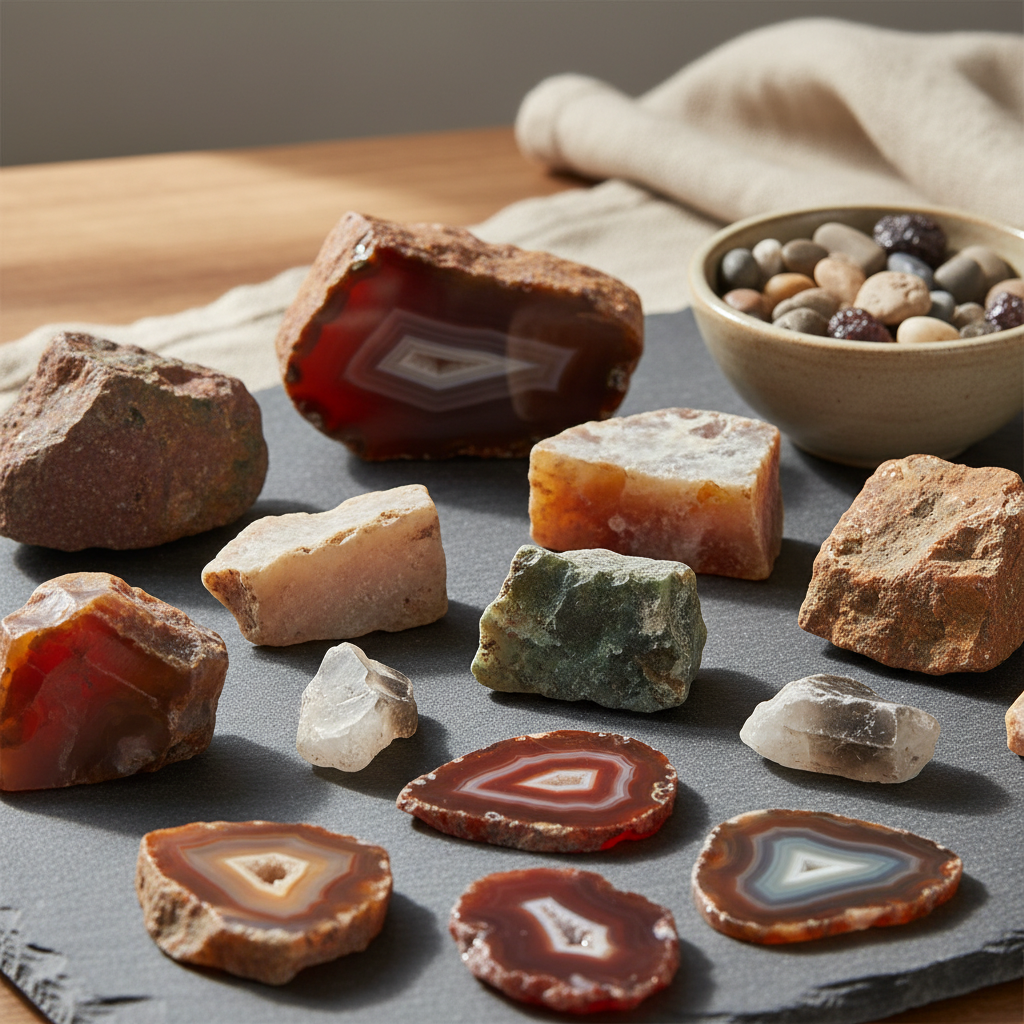
What Is Agate?
Understanding agate formation and composition requires attention to multiple physical and optical properties that experienced collectors evaluate systematically. Observation number 1 in your identification journey builds pattern recognition that apps and field guides reinforce. Color, hardness, luster, cleavage, fracture, crystal habit, and specific gravity each eliminate possibilities and narrow your search. When combined with modern AI tools like Rock Identifier, these traditional skills create a comprehensive identification workflow that serves you in the field, at gem shows, and at home with inherited collections.
Understanding agate formation and composition requires attention to multiple physical and optical properties that experienced collectors evaluate systematically. Observation number 2 in your identification journey builds pattern recognition that apps and field guides reinforce. Color, hardness, luster, cleavage, fracture, crystal habit, and specific gravity each eliminate possibilities and narrow your search. When combined with modern AI tools like Rock Identifier, these traditional skills create a comprehensive identification workflow that serves you in the field, at gem shows, and at home with inherited collections.
Understanding agate formation and composition requires attention to multiple physical and optical properties that experienced collectors evaluate systematically. Observation number 3 in your identification journey builds pattern recognition that apps and field guides reinforce. Color, hardness, luster, cleavage, fracture, crystal habit, and specific gravity each eliminate possibilities and narrow your search. When combined with modern AI tools like Rock Identifier, these traditional skills create a comprehensive identification workflow that serves you in the field, at gem shows, and at home with inherited collections.
Recognizing Raw Agate in the Field
Raw agate rarely looks like the polished slabs in rock shops. In the field, agate nodules appear as rounded, waxy-lustered stones often partially embedded in volcanic or sedimentary host rock. The exterior surface — called the cortex — is typically rough, chalky, or waxy in texture, hiding the spectacular banding within.
Look for nodules in volcanic flows, river gravels, and desert surfaces. Agate forms in cavities within basalt and other volcanic rocks where silica-rich fluids deposited layer upon layer over geological time. River systems transport broken nodules far from their source, distributing agate across landscapes.
The waxy to dull luster of agate's exterior distinguishes it from ordinary river rocks. Pick up suspicious nodules and examine them closely. A slightly translucent edge where the cortex is thin, a heavier feel than expected for the size, and concentric banding visible through thin sections all suggest agate.
Experienced collectors develop an eye for agate nodules that beginners miss. The shape — often walnut-like or irregularly rounded — combined with surface texture provides reliable field clues. When in doubt, photograph the specimen with Rock Identifier for AI analysis that considers these subtle characteristics.
Types of Agate
Understanding agate varieties worldwide requires attention to multiple physical and optical properties that experienced collectors evaluate systematically. Observation number 1 in your identification journey builds pattern recognition that apps and field guides reinforce. Color, hardness, luster, cleavage, fracture, crystal habit, and specific gravity each eliminate possibilities and narrow your search. When combined with modern AI tools like Rock Identifier, these traditional skills create a comprehensive identification workflow that serves you in the field, at gem shows, and at home with inherited collections.
Understanding agate varieties worldwide requires attention to multiple physical and optical properties that experienced collectors evaluate systematically. Observation number 2 in your identification journey builds pattern recognition that apps and field guides reinforce. Color, hardness, luster, cleavage, fracture, crystal habit, and specific gravity each eliminate possibilities and narrow your search. When combined with modern AI tools like Rock Identifier, these traditional skills create a comprehensive identification workflow that serves you in the field, at gem shows, and at home with inherited collections.
Understanding agate varieties worldwide requires attention to multiple physical and optical properties that experienced collectors evaluate systematically. Observation number 3 in your identification journey builds pattern recognition that apps and field guides reinforce. Color, hardness, luster, cleavage, fracture, crystal habit, and specific gravity each eliminate possibilities and narrow your search. When combined with modern AI tools like Rock Identifier, these traditional skills create a comprehensive identification workflow that serves you in the field, at gem shows, and at home with inherited collections.
Understanding agate varieties worldwide requires attention to multiple physical and optical properties that experienced collectors evaluate systematically. Observation number 4 in your identification journey builds pattern recognition that apps and field guides reinforce. Color, hardness, luster, cleavage, fracture, crystal habit, and specific gravity each eliminate possibilities and narrow your search. When combined with modern AI tools like Rock Identifier, these traditional skills create a comprehensive identification workflow that serves you in the field, at gem shows, and at home with inherited collections.
Physical Tests for Agate Confirmation
Understanding confirming agate identity requires attention to multiple physical and optical properties that experienced collectors evaluate systematically. Observation number 1 in your identification journey builds pattern recognition that apps and field guides reinforce. Color, hardness, luster, cleavage, fracture, crystal habit, and specific gravity each eliminate possibilities and narrow your search. When combined with modern AI tools like Rock Identifier, these traditional skills create a comprehensive identification workflow that serves you in the field, at gem shows, and at home with inherited collections.
Understanding confirming agate identity requires attention to multiple physical and optical properties that experienced collectors evaluate systematically. Observation number 2 in your identification journey builds pattern recognition that apps and field guides reinforce. Color, hardness, luster, cleavage, fracture, crystal habit, and specific gravity each eliminate possibilities and narrow your search. When combined with modern AI tools like Rock Identifier, these traditional skills create a comprehensive identification workflow that serves you in the field, at gem shows, and at home with inherited collections.
Understanding confirming agate identity requires attention to multiple physical and optical properties that experienced collectors evaluate systematically. Observation number 3 in your identification journey builds pattern recognition that apps and field guides reinforce. Color, hardness, luster, cleavage, fracture, crystal habit, and specific gravity each eliminate possibilities and narrow your search. When combined with modern AI tools like Rock Identifier, these traditional skills create a comprehensive identification workflow that serves you in the field, at gem shows, and at home with inherited collections.
Famous Agate Localities
Understanding agate collecting locations requires attention to multiple physical and optical properties that experienced collectors evaluate systematically. Observation number 1 in your identification journey builds pattern recognition that apps and field guides reinforce. Color, hardness, luster, cleavage, fracture, crystal habit, and specific gravity each eliminate possibilities and narrow your search. When combined with modern AI tools like Rock Identifier, these traditional skills create a comprehensive identification workflow that serves you in the field, at gem shows, and at home with inherited collections.
Understanding agate collecting locations requires attention to multiple physical and optical properties that experienced collectors evaluate systematically. Observation number 2 in your identification journey builds pattern recognition that apps and field guides reinforce. Color, hardness, luster, cleavage, fracture, crystal habit, and specific gravity each eliminate possibilities and narrow your search. When combined with modern AI tools like Rock Identifier, these traditional skills create a comprehensive identification workflow that serves you in the field, at gem shows, and at home with inherited collections.
Understanding agate collecting locations requires attention to multiple physical and optical properties that experienced collectors evaluate systematically. Observation number 3 in your identification journey builds pattern recognition that apps and field guides reinforce. Color, hardness, luster, cleavage, fracture, crystal habit, and specific gravity each eliminate possibilities and narrow your search. When combined with modern AI tools like Rock Identifier, these traditional skills create a comprehensive identification workflow that serves you in the field, at gem shows, and at home with inherited collections.
From Raw Agate to Polished Specimen
Understanding agate lapidary process requires attention to multiple physical and optical properties that experienced collectors evaluate systematically. Observation number 1 in your identification journey builds pattern recognition that apps and field guides reinforce. Color, hardness, luster, cleavage, fracture, crystal habit, and specific gravity each eliminate possibilities and narrow your search. When combined with modern AI tools like Rock Identifier, these traditional skills create a comprehensive identification workflow that serves you in the field, at gem shows, and at home with inherited collections.
Understanding agate lapidary process requires attention to multiple physical and optical properties that experienced collectors evaluate systematically. Observation number 2 in your identification journey builds pattern recognition that apps and field guides reinforce. Color, hardness, luster, cleavage, fracture, crystal habit, and specific gravity each eliminate possibilities and narrow your search. When combined with modern AI tools like Rock Identifier, these traditional skills create a comprehensive identification workflow that serves you in the field, at gem shows, and at home with inherited collections.
Understanding agate lapidary process requires attention to multiple physical and optical properties that experienced collectors evaluate systematically. Observation number 3 in your identification journey builds pattern recognition that apps and field guides reinforce. Color, hardness, luster, cleavage, fracture, crystal habit, and specific gravity each eliminate possibilities and narrow your search. When combined with modern AI tools like Rock Identifier, these traditional skills create a comprehensive identification workflow that serves you in the field, at gem shows, and at home with inherited collections.
Using Rock Identifier for Agate
Understanding AI agate identification requires attention to multiple physical and optical properties that experienced collectors evaluate systematically. Observation number 1 in your identification journey builds pattern recognition that apps and field guides reinforce. Color, hardness, luster, cleavage, fracture, crystal habit, and specific gravity each eliminate possibilities and narrow your search. When combined with modern AI tools like Rock Identifier, these traditional skills create a comprehensive identification workflow that serves you in the field, at gem shows, and at home with inherited collections.
Understanding AI agate identification requires attention to multiple physical and optical properties that experienced collectors evaluate systematically. Observation number 2 in your identification journey builds pattern recognition that apps and field guides reinforce. Color, hardness, luster, cleavage, fracture, crystal habit, and specific gravity each eliminate possibilities and narrow your search. When combined with modern AI tools like Rock Identifier, these traditional skills create a comprehensive identification workflow that serves you in the field, at gem shows, and at home with inherited collections.
Understanding AI agate identification requires attention to multiple physical and optical properties that experienced collectors evaluate systematically. Observation number 3 in your identification journey builds pattern recognition that apps and field guides reinforce. Color, hardness, luster, cleavage, fracture, crystal habit, and specific gravity each eliminate possibilities and narrow your search. When combined with modern AI tools like Rock Identifier, these traditional skills create a comprehensive identification workflow that serves you in the field, at gem shows, and at home with inherited collections.
Building an Agate Collection
Understanding agate collecting tips requires attention to multiple physical and optical properties that experienced collectors evaluate systematically. Observation number 1 in your identification journey builds pattern recognition that apps and field guides reinforce. Color, hardness, luster, cleavage, fracture, crystal habit, and specific gravity each eliminate possibilities and narrow your search. When combined with modern AI tools like Rock Identifier, these traditional skills create a comprehensive identification workflow that serves you in the field, at gem shows, and at home with inherited collections.
Understanding agate collecting tips requires attention to multiple physical and optical properties that experienced collectors evaluate systematically. Observation number 2 in your identification journey builds pattern recognition that apps and field guides reinforce. Color, hardness, luster, cleavage, fracture, crystal habit, and specific gravity each eliminate possibilities and narrow your search. When combined with modern AI tools like Rock Identifier, these traditional skills create a comprehensive identification workflow that serves you in the field, at gem shows, and at home with inherited collections.
Understanding agate collecting tips requires attention to multiple physical and optical properties that experienced collectors evaluate systematically. Observation number 3 in your identification journey builds pattern recognition that apps and field guides reinforce. Color, hardness, luster, cleavage, fracture, crystal habit, and specific gravity each eliminate possibilities and narrow your search. When combined with modern AI tools like Rock Identifier, these traditional skills create a comprehensive identification workflow that serves you in the field, at gem shows, and at home with inherited collections.
Frequently Asked Questions
How do you identify raw agate?
Look for waxy luster, rounded nodule shapes, and translucency at thin edges. Confirm with hardness testing (7 on Mohs) and Rock Identifier photo analysis.
What does raw agate look like?
Raw agate appears as rounded nodules with rough, waxy exteriors. Internal banding is usually hidden until the nodule is cut or broken open.
Where can I find agate?
Agate occurs in volcanic rocks, river gravels, and desert surfaces worldwide. Notable locations include Oregon, Montana, Brazil, and Botswana.
Is agate valuable?
Most agate is modestly priced, but specimens with exceptional banding, color, or rarity — like Lake Superior agate or Laguna agate — command premium prices.
Can Rock Identifier identify agate?
Yes, Rock Identifier recognizes agate and chalcedony varieties from photographs, distinguishing them from similar-looking jasper and chert.
Download Rock Identifier Today
Whether you are a seasoned collector or picking up your first interesting pebble, Rock Identifier: Find Stone puts expert-level identification in your pocket. Simply snap a photo of any rock, gem, crystal, or mineral and receive detailed results within seconds.
Download Rock Identifier on the App Store and start your geological journey today.