
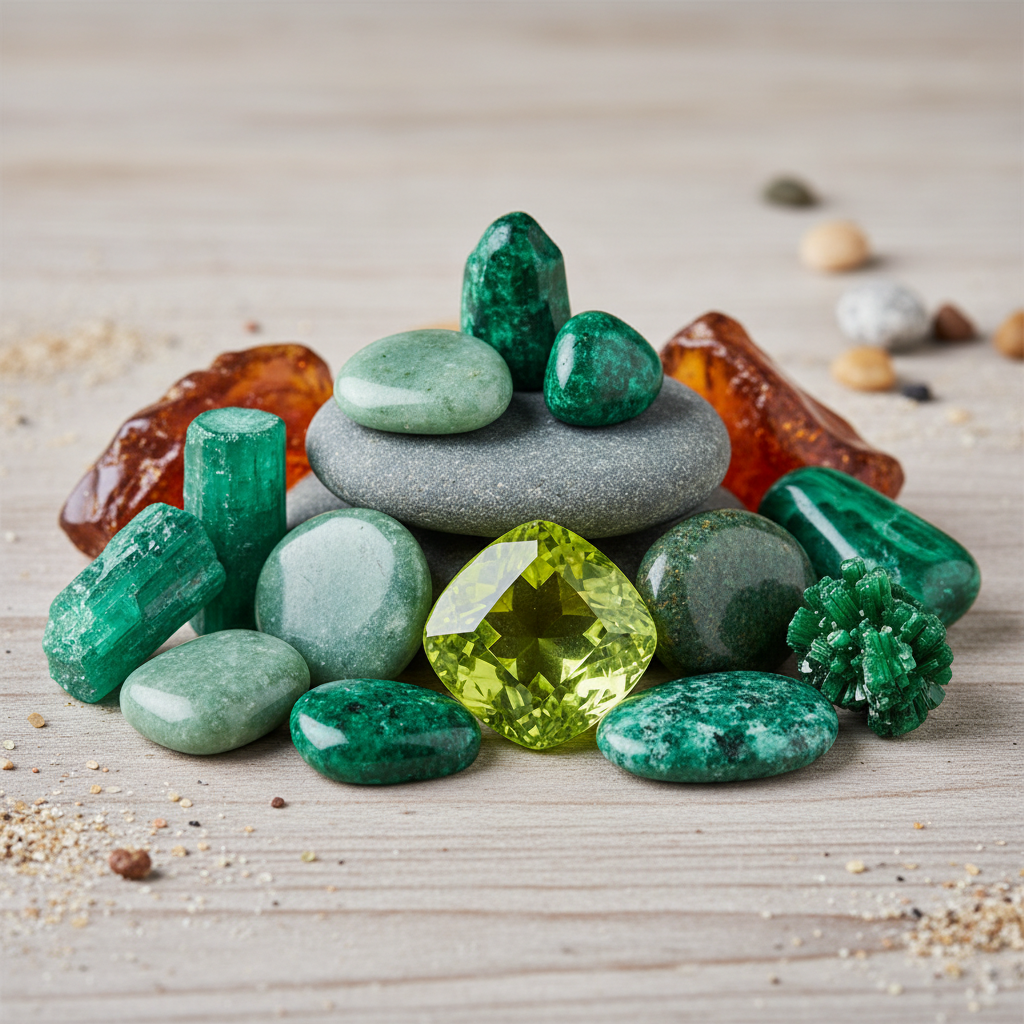
Why Green Stones Fascinate Collectors
Understanding green mineral appeal requires attention to multiple physical and optical properties that experienced collectors evaluate systematically. Observation number 1 in your identification journey builds pattern recognition that apps and field guides reinforce. Color, hardness, luster, cleavage, fracture, crystal habit, and specific gravity each eliminate possibilities and narrow your search. When combined with modern AI tools like Rock Identifier, these traditional skills create a comprehensive identification workflow that serves you in the field, at gem shows, and at home with inherited collections.
Understanding green mineral appeal requires attention to multiple physical and optical properties that experienced collectors evaluate systematically. Observation number 2 in your identification journey builds pattern recognition that apps and field guides reinforce. Color, hardness, luster, cleavage, fracture, crystal habit, and specific gravity each eliminate possibilities and narrow your search. When combined with modern AI tools like Rock Identifier, these traditional skills create a comprehensive identification workflow that serves you in the field, at gem shows, and at home with inherited collections.
Understanding green mineral appeal requires attention to multiple physical and optical properties that experienced collectors evaluate systematically. Observation number 3 in your identification journey builds pattern recognition that apps and field guides reinforce. Color, hardness, luster, cleavage, fracture, crystal habit, and specific gravity each eliminate possibilities and narrow your search. When combined with modern AI tools like Rock Identifier, these traditional skills create a comprehensive identification workflow that serves you in the field, at gem shows, and at home with inherited collections.
Common Green Minerals and Their Properties
Jade encompasses two distinct minerals: jadeite and nephrite. Jadeite, the rarer and more valuable variety, occurs in vivid greens ranging from apple to imperial green. Neprite is more common, typically showing muted green to creamy white colors with a waxy luster. Both are tough minerals rated 6 to 7 on Mohs, making them ideal for carving and jewelry.
Emerald is green beryl colored by chromium and sometimes vanadium. Fine emeralds command extraordinary prices, but included specimens are common and affordable for collectors. Emerald's hexagonal crystals and characteristic inclusions — called jardin — distinguish it from other green gems.
Peridot is gem-quality olivine, an iron-magnesium silicate with a distinctive olive to lime green color. Unlike most gems, peridot occurs in only one color. Its vitreous luster and conchoidal fracture are identification hallmarks. Peridot is found in volcanic rocks, meteorites, and mantle xenoliths.
Malachite is a copper carbonate hydroxide with unmistakable banded green patterns. Its botryoidal and stalactitic forms produce striking display specimens. Malachite is soft at 3.5 to 4 on Mohs and should be handled carefully. It forms in copper deposit oxidation zones worldwide.
Aventurine quartz displays a glittering effect from included mica or other minerals. Green aventurine is the most common color, used extensively in carvings, beads, and tumbled stones. Its hardness of 7 and granular texture distinguish it from jade and other green stones.
Distinguishing Similar Green Stones
Understanding green stone differentiation requires attention to multiple physical and optical properties that experienced collectors evaluate systematically. Observation number 1 in your identification journey builds pattern recognition that apps and field guides reinforce. Color, hardness, luster, cleavage, fracture, crystal habit, and specific gravity each eliminate possibilities and narrow your search. When combined with modern AI tools like Rock Identifier, these traditional skills create a comprehensive identification workflow that serves you in the field, at gem shows, and at home with inherited collections.
Understanding green stone differentiation requires attention to multiple physical and optical properties that experienced collectors evaluate systematically. Observation number 2 in your identification journey builds pattern recognition that apps and field guides reinforce. Color, hardness, luster, cleavage, fracture, crystal habit, and specific gravity each eliminate possibilities and narrow your search. When combined with modern AI tools like Rock Identifier, these traditional skills create a comprehensive identification workflow that serves you in the field, at gem shows, and at home with inherited collections.
Understanding green stone differentiation requires attention to multiple physical and optical properties that experienced collectors evaluate systematically. Observation number 3 in your identification journey builds pattern recognition that apps and field guides reinforce. Color, hardness, luster, cleavage, fracture, crystal habit, and specific gravity each eliminate possibilities and narrow your search. When combined with modern AI tools like Rock Identifier, these traditional skills create a comprehensive identification workflow that serves you in the field, at gem shows, and at home with inherited collections.
Understanding green stone differentiation requires attention to multiple physical and optical properties that experienced collectors evaluate systematically. Observation number 4 in your identification journey builds pattern recognition that apps and field guides reinforce. Color, hardness, luster, cleavage, fracture, crystal habit, and specific gravity each eliminate possibilities and narrow your search. When combined with modern AI tools like Rock Identifier, these traditional skills create a comprehensive identification workflow that serves you in the field, at gem shows, and at home with inherited collections.
Green Stone Hardness Guide
Understanding hardness testing green minerals requires attention to multiple physical and optical properties that experienced collectors evaluate systematically. Observation number 1 in your identification journey builds pattern recognition that apps and field guides reinforce. Color, hardness, luster, cleavage, fracture, crystal habit, and specific gravity each eliminate possibilities and narrow your search. When combined with modern AI tools like Rock Identifier, these traditional skills create a comprehensive identification workflow that serves you in the field, at gem shows, and at home with inherited collections.
Understanding hardness testing green minerals requires attention to multiple physical and optical properties that experienced collectors evaluate systematically. Observation number 2 in your identification journey builds pattern recognition that apps and field guides reinforce. Color, hardness, luster, cleavage, fracture, crystal habit, and specific gravity each eliminate possibilities and narrow your search. When combined with modern AI tools like Rock Identifier, these traditional skills create a comprehensive identification workflow that serves you in the field, at gem shows, and at home with inherited collections.
Understanding hardness testing green minerals requires attention to multiple physical and optical properties that experienced collectors evaluate systematically. Observation number 3 in your identification journey builds pattern recognition that apps and field guides reinforce. Color, hardness, luster, cleavage, fracture, crystal habit, and specific gravity each eliminate possibilities and narrow your search. When combined with modern AI tools like Rock Identifier, these traditional skills create a comprehensive identification workflow that serves you in the field, at gem shows, and at home with inherited collections.
Identifying Green Stones with Rock Identifier
Understanding AI green stone identification requires attention to multiple physical and optical properties that experienced collectors evaluate systematically. Observation number 1 in your identification journey builds pattern recognition that apps and field guides reinforce. Color, hardness, luster, cleavage, fracture, crystal habit, and specific gravity each eliminate possibilities and narrow your search. When combined with modern AI tools like Rock Identifier, these traditional skills create a comprehensive identification workflow that serves you in the field, at gem shows, and at home with inherited collections.
Understanding AI green stone identification requires attention to multiple physical and optical properties that experienced collectors evaluate systematically. Observation number 2 in your identification journey builds pattern recognition that apps and field guides reinforce. Color, hardness, luster, cleavage, fracture, crystal habit, and specific gravity each eliminate possibilities and narrow your search. When combined with modern AI tools like Rock Identifier, these traditional skills create a comprehensive identification workflow that serves you in the field, at gem shows, and at home with inherited collections.
Understanding AI green stone identification requires attention to multiple physical and optical properties that experienced collectors evaluate systematically. Observation number 3 in your identification journey builds pattern recognition that apps and field guides reinforce. Color, hardness, luster, cleavage, fracture, crystal habit, and specific gravity each eliminate possibilities and narrow your search. When combined with modern AI tools like Rock Identifier, these traditional skills create a comprehensive identification workflow that serves you in the field, at gem shows, and at home with inherited collections.
Green Stones in Jewelry
Understanding green gemstones in jewelry requires attention to multiple physical and optical properties that experienced collectors evaluate systematically. Observation number 1 in your identification journey builds pattern recognition that apps and field guides reinforce. Color, hardness, luster, cleavage, fracture, crystal habit, and specific gravity each eliminate possibilities and narrow your search. When combined with modern AI tools like Rock Identifier, these traditional skills create a comprehensive identification workflow that serves you in the field, at gem shows, and at home with inherited collections.
Understanding green gemstones in jewelry requires attention to multiple physical and optical properties that experienced collectors evaluate systematically. Observation number 2 in your identification journey builds pattern recognition that apps and field guides reinforce. Color, hardness, luster, cleavage, fracture, crystal habit, and specific gravity each eliminate possibilities and narrow your search. When combined with modern AI tools like Rock Identifier, these traditional skills create a comprehensive identification workflow that serves you in the field, at gem shows, and at home with inherited collections.
Understanding green gemstones in jewelry requires attention to multiple physical and optical properties that experienced collectors evaluate systematically. Observation number 3 in your identification journey builds pattern recognition that apps and field guides reinforce. Color, hardness, luster, cleavage, fracture, crystal habit, and specific gravity each eliminate possibilities and narrow your search. When combined with modern AI tools like Rock Identifier, these traditional skills create a comprehensive identification workflow that serves you in the field, at gem shows, and at home with inherited collections.
Collecting Green Minerals
Understanding green mineral collecting requires attention to multiple physical and optical properties that experienced collectors evaluate systematically. Observation number 1 in your identification journey builds pattern recognition that apps and field guides reinforce. Color, hardness, luster, cleavage, fracture, crystal habit, and specific gravity each eliminate possibilities and narrow your search. When combined with modern AI tools like Rock Identifier, these traditional skills create a comprehensive identification workflow that serves you in the field, at gem shows, and at home with inherited collections.
Understanding green mineral collecting requires attention to multiple physical and optical properties that experienced collectors evaluate systematically. Observation number 2 in your identification journey builds pattern recognition that apps and field guides reinforce. Color, hardness, luster, cleavage, fracture, crystal habit, and specific gravity each eliminate possibilities and narrow your search. When combined with modern AI tools like Rock Identifier, these traditional skills create a comprehensive identification workflow that serves you in the field, at gem shows, and at home with inherited collections.
Understanding green mineral collecting requires attention to multiple physical and optical properties that experienced collectors evaluate systematically. Observation number 3 in your identification journey builds pattern recognition that apps and field guides reinforce. Color, hardness, luster, cleavage, fracture, crystal habit, and specific gravity each eliminate possibilities and narrow your search. When combined with modern AI tools like Rock Identifier, these traditional skills create a comprehensive identification workflow that serves you in the field, at gem shows, and at home with inherited collections.
Care and Handling of Green Stones
Understanding green stone care requires attention to multiple physical and optical properties that experienced collectors evaluate systematically. Observation number 1 in your identification journey builds pattern recognition that apps and field guides reinforce. Color, hardness, luster, cleavage, fracture, crystal habit, and specific gravity each eliminate possibilities and narrow your search. When combined with modern AI tools like Rock Identifier, these traditional skills create a comprehensive identification workflow that serves you in the field, at gem shows, and at home with inherited collections.
Understanding green stone care requires attention to multiple physical and optical properties that experienced collectors evaluate systematically. Observation number 2 in your identification journey builds pattern recognition that apps and field guides reinforce. Color, hardness, luster, cleavage, fracture, crystal habit, and specific gravity each eliminate possibilities and narrow your search. When combined with modern AI tools like Rock Identifier, these traditional skills create a comprehensive identification workflow that serves you in the field, at gem shows, and at home with inherited collections.
Understanding green stone care requires attention to multiple physical and optical properties that experienced collectors evaluate systematically. Observation number 3 in your identification journey builds pattern recognition that apps and field guides reinforce. Color, hardness, luster, cleavage, fracture, crystal habit, and specific gravity each eliminate possibilities and narrow your search. When combined with modern AI tools like Rock Identifier, these traditional skills create a comprehensive identification workflow that serves you in the field, at gem shows, and at home with inherited collections.
Frequently Asked Questions
How do I identify a green stone?
Check hardness, luster, and transparency. Photograph the stone and use Rock Identifier for AI-powered identification with detailed mineral profiles.
What is the most valuable green stone?
Fine jadeite and emerald command the highest prices among green gemstones, though value depends on color intensity, clarity, and size.
Is green aventurine the same as jade?
No. Aventurine is quartz with mineral inclusions creating a glitter effect. Jade is either jadeite or nephrite, different minerals entirely.
Can Rock Identifier tell jade from other green stones?
Rock Identifier analyzes visual properties to distinguish jade, aventurine, malachite, and other green stones, providing ranked identification results.
Where are green stones found?
Green minerals occur worldwide in diverse geological settings. Jade comes from Myanmar and Central America, peridot from Arizona and Pakistan, malachite from Congo and Arizona.
Download Rock Identifier Today
Whether you are a seasoned collector or picking up your first interesting pebble, Rock Identifier: Find Stone puts expert-level identification in your pocket. Simply snap a photo of any rock, gem, crystal, or mineral and receive detailed results within seconds.
Download Rock Identifier on the App Store and start your geological journey today.