
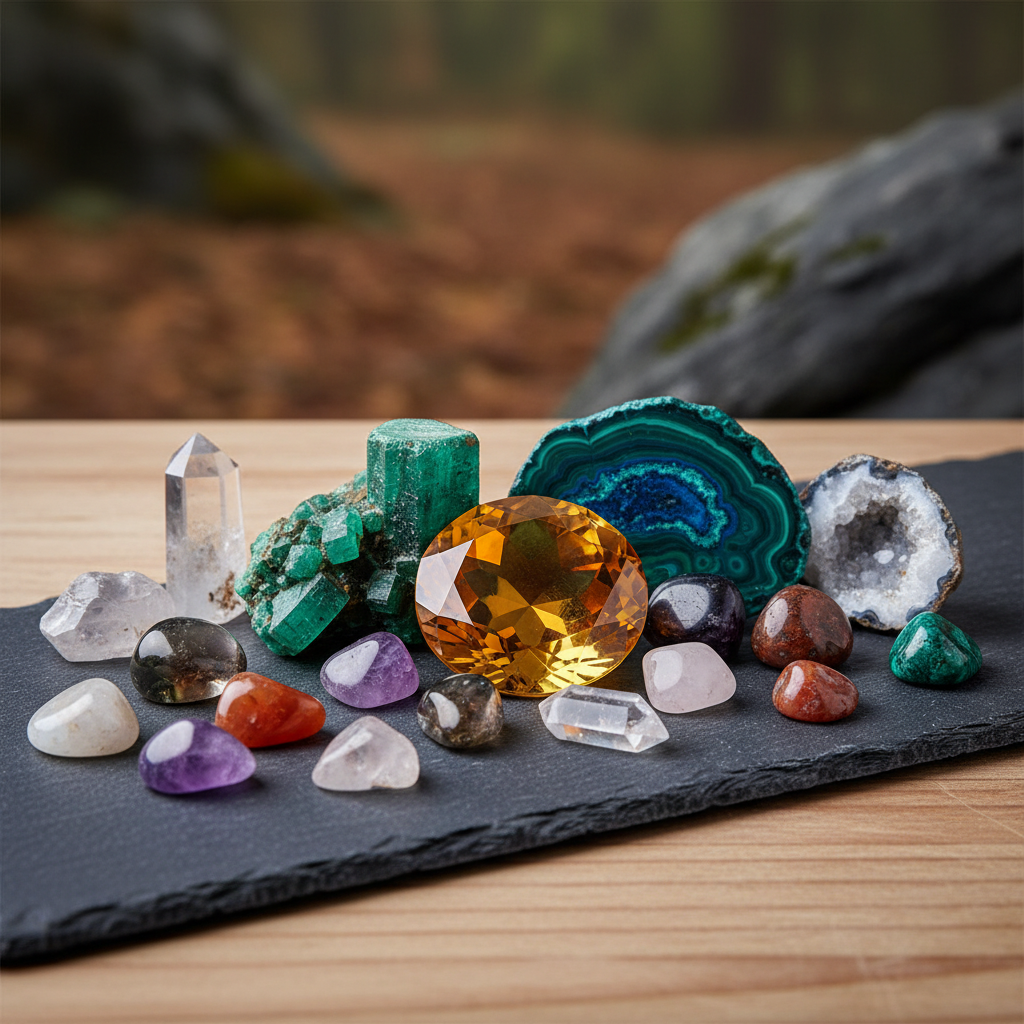
Introduction to Gemstone Identification
Gemstone identification is both an art and a science. For centuries, jewelers, gemologists, and collectors have relied on a combination of visual observation, physical testing, and specialized instruments to name and evaluate precious and semi-precious stones. Today, technology has added a powerful new tool to this tradition: the gem identifier app, which uses artificial intelligence to analyze photographs and suggest identifications within seconds.
Whether you inherited a jewelry box of unmarked stones, purchased rough material at a gem show, or found an intriguing crystal on a hike, knowing what you are holding transforms curiosity into knowledge. Gem identification affects value assessment, care instructions, and appreciation of the stone's natural history. A stone identified as aquamarine carries different significance than one identified as blue topaz, even when they appear similar to the untrained eye.
This guide covers the fundamentals of gemstone identification, from the optical properties that distinguish species to the practical role that apps like Rock Identifier play in modern gemology. Whether you are a beginner or an experienced collector expanding your skills, understanding these principles will make you a more confident identifier.
The Four Cs and Beyond
Most people know the four Cs of diamonds — cut, color, clarity, and carat weight. But gemstone identification extends far beyond these commercial grading factors. Professional gemologists evaluate refractive index, specific gravity, pleochroism, fluorescence, absorption spectra, and inclusion patterns to distinguish species and varieties.
Color is often the first characteristic people notice, but it is also one of the most misleading. Many gemstones occur in multiple colors, and treatments can dramatically alter appearance. Amethyst and citrine are the same mineral — quartz — colored differently by trace iron impurities and heat. Identifying by color alone would conflate dozens of distinct species.
Hardness, measured on the Mohs scale, provides a quick field test. A gemstone that scratches glass but not a steel file falls between 5.5 and 6.5 on the scale. Combined with other observations, hardness narrows possibilities considerably. Rock Identifier incorporates hardness data into its analysis, presenting this information alongside visual identification results.
Luster describes how light interacts with a surface. Adamantine luster characterizes diamond and some zircons. Vitreous luster appears glass-like on quartz and tourmaline. Pearly, silky, and resinous lusters each suggest different mineral groups. Learning to recognize luster types takes practice but becomes intuitive with regular observation.
Common Gemstone Groups and How to Recognize Them
Quartz is the most abundant gemstone family, encompassing amethyst, citrine, rose quartz, smoky quartz, and chalcedony varieties like agate, jasper, carnelian, and onyx. Quartz is hard (7 on Mohs), has vitreous luster, and typically shows conchoidal fracture. Its ubiquity makes it both easy and challenging to identify — easy because the properties are consistent, challenging because quartz appears in countless forms.
The beryl family includes emerald, aquamarine, morganite, and heliodor. Beryl crystals are hexagonal with a characteristic prismatic habit. Emerald is distinguished by its chromium-induced green color and typically included appearance. Aquamarine ranges from pale to deep blue-green, colored by iron. These gems are prized for their clarity and color in fine specimens.
Corundum gives us ruby and sapphire, among the hardest gemstones at 9 on Mohs. Ruby is red corundum colored by chromium, while sapphire encompasses all other corundum colors, most famously blue. Star rubies and sapphires display asterism — a six-rayed star that moves across the surface as the stone is rotated.
The garnet group includes almandine, pyrope, spessartine, grossular, and andradite varieties. Garnets are isometric crystals, typically well-formed dodecahedrons or trapezohedrons. They range from deep red almandine to green tsavorite and orange spessartine. Garnet's consistent hardness of 6.5 to 7.5 and lack of cleavage make it durable for jewelry.
Feldspar gemstones include moonstone, labradorite, and sunstone. These display remarkable optical phenomena — adularescence in moonstone creates a floating blue sheen, while labradorite shows iridescent color flashes called labradorescence. These effects make feldspar gems instantly recognizable once you know what to look for.
Using a Gem Identifier App Effectively
Gem identifier apps like Rock Identifier analyze photographs to suggest gemstone identifications. The technology has advanced rapidly, and modern apps achieve impressive accuracy on common gemstones with good photographic input. Understanding how to use these tools effectively maximizes their value.
Photograph gemstones against a plain white or neutral gray background. Use diffused natural light to reveal true color without harsh shadows. For transparent gems, try both reflected and transmitted light photos. A flashlight behind the stone reveals internal characteristics — inclusions, color zoning, and optical effects — that surface photos miss.
Include multiple views: table, crown, pavilion, and profile angles for faceted stones. For rough material, photograph both the natural surface and a freshly broken or cut face. The internal texture visible on a fracture surface often provides more identification information than the weathered exterior.
When the app returns results, read the full profile rather than stopping at the name. Rock Identifier provides hardness, crystal system, chemical composition, formation environment, and distinguishing features. This context helps you understand why the app suggested a particular gem and what properties you can verify independently.
Physical Testing Methods for Gemstones
While apps provide rapid identifications, physical tests remain the gold standard for confirmation. The streak test involves rubbing a mineral on unglazed porcelain tile. The color of the powder streak often differs from the surface color and provides a reliable identification clue. Corundum leaves a white streak regardless of body color.
Specific gravity testing distinguishes gems of similar appearance but different density. A diamond (SG 3.52) feels noticeably heavier than a cubic zirconia (SG 5.7) of the same size, while quartz (SG 2.65) feels lighter than both. Simple hydrostatic weighing or comparison with known-density liquids provides this measurement.
Refractive index is the most definitive optical property for gem identification. A refractometer measures how much light bends when entering a gemstone. Each species has a characteristic RI or range. Diamond's RI of 2.42 is unmistakable, as is the birefringence displayed by doubly refractive minerals like calcite and zircon.
Magnification reveals inclusion patterns that are diagnostic for certain gems. Burmese rubies may contain rutile silk inclusions. Colombian emeralds characteristically show three-phase inclusions. These internal features, visible with a 10x loupe, provide identification evidence that external appearance alone cannot.
Synthetic and Treated Gemstones
Modern gemology must account for synthetic gemstones and treatments that alter natural appearance. Synthetic corundum, spinel, and quartz are manufactured in laboratories with compositions identical to natural material. Visual identification alone cannot distinguish synthetic from natural — advanced testing with spectroscopy and microscopy is required.
Heat treatment enhances color in many gems. Heat-treated amethyst can produce citrine. Heated sapphire improves blue color and clarity. Irradiation creates blue topaz from colorless material. Diffusion treatment adds color to the surface layer of stones like corundum. These treatments are legal when disclosed but affect value significantly.
Glass-filled rubies and fracture-filled diamonds represent more aggressive treatments. Glass filling improves apparent clarity by filling surface-reaching fractures with lead glass. Fracture filling in diamonds uses specialized compounds to minimize the visibility of internal flaws. Gem identifier apps may not detect these treatments, so professional evaluation remains important for valuable stones.
When using Rock Identifier on gemstones of potential value, treat the result as preliminary. The app identifies the mineral species based on visual characteristics but cannot assess treatment history or synthetic origin. For insurance, sale, or significant purchase decisions, consult a certified gemologist.
Building a Gem Reference Collection
A reference collection of known gemstones accelerates your identification skills. Start with inexpensive but distinctive specimens: a piece of quartz, an agate slice, a garnet crystal, a piece of rough amethyst. Label each with its verified identity and key properties. Compare unknown specimens against your reference set.
Rock Identifier's collection feature supports this learning process. Save identifications of verified specimens to build a digital reference library. When you encounter an unknown stone, photograph it and compare the app's results against your saved references. Patterns emerge as you handle more material.
Visit gem and mineral shows to see wide varieties of specimens under one roof. Dealers often gladly explain what they are selling and how they identified it. Handle stones, ask questions, and photograph interesting specimens for later identification with your app.
Join a local gem and mineral club. Club members range from beginners to expert collectors and lapidaries. Monthly meetings, field trips, and workshops provide hands-on learning that no app or book can fully replicate. The community aspect of gem collecting enriches the hobby immeasurably.
Gem Identification in the Field
Finding gemstones in the field is one of rockhounding's greatest thrills. While precious gem deposits are rare, semi-precious material like agate, jasper, quartz crystals, and garnet occurs widely. Knowing what to look for and where to search increases your success rate dramatically.
Research your area's geology before heading out. State geological survey publications, USGS maps, and local rockhounding guides identify known collecting sites and the minerals associated with regional formations. Public lands often allow casual collecting, but always verify regulations before removing material.
Essential field tools include safety glasses, sturdy gloves, rock hammer, chisels, bags for specimens, and your phone with Rock Identifier installed. A hand lens or 10x loupe helps examine crystals in the field. UV light reveals fluorescent minerals that might otherwise go unnoticed.
When you find something promising, photograph it in place before extracting it. Context photos showing the surrounding rock type provide identification clues. Once extracted, clean the specimen minimally and photograph it again for app identification. Save the find to your collection with location notes for future reference.
When to Seek Professional Gemological Testing
Professional gemological laboratories provide definitive identification using instruments beyond what any app or hobbyist can access. The Gemological Institute of America (GIA), American Gemological Laboratories (AGL), and similar institutions issue reports detailing species, variety, treatments, and origin for significant stones.
Seek professional testing when a gemstone's value exceeds the cost of testing, when buying or selling without established provenance, when identification results from apps or visual inspection conflict, or when insurance documentation is required. A GIA report for a diamond or colored gemstone provides internationally recognized authentication.
Rock Identifier complements professional gemology rather than replacing it. Use the app for everyday identification, education, and field reference. Reserve laboratory testing for stones where financial or legal stakes justify the expense. This tiered approach gives you rapid answers for casual finds and authoritative certification when it matters.
Frequently Asked Questions
What is the best gem identifier app?
Rock Identifier is a leading gem identifier app that uses AI to identify gemstones, crystals, and minerals from photos. It provides detailed profiles including hardness, crystal system, and formation information.
Can you identify gems by photo alone?
Many common gemstones can be identified from high-quality photos using AI analysis. However, similar-looking stones may require physical testing for definitive identification. Rock Identifier provides a strong starting point.
How do I tell if a gemstone is real?
Check hardness, specific gravity, refractive index, and inclusion patterns. Synthetic and treated stones may look identical to natural ones visually. Professional gemological testing provides definitive answers for valuable stones.
What gemstones can Rock Identifier identify?
Rock Identifier identifies a wide range of gemstones including quartz varieties, beryl, corundum, garnet, feldspar, tourmaline, and many more from photographs.
Is gem identification difficult to learn?
Basic identification skills develop quickly with practice and good tools. Rock Identifier accelerates learning by providing instant feedback and educational context for every specimen you photograph.
Download Rock Identifier Today
Whether you are a seasoned collector or picking up your first interesting pebble, Rock Identifier: Find Stone puts expert-level identification in your pocket. Simply snap a photo of any rock, gem, crystal, or mineral and receive detailed results within seconds.
The app covers thousands of specimens with information on hardness, luster, crystal structure, formation, and geographic origins. Save your finds to build a personal collection and learn something new with every identification.
Download Rock Identifier on the App Store and start your geological journey today.